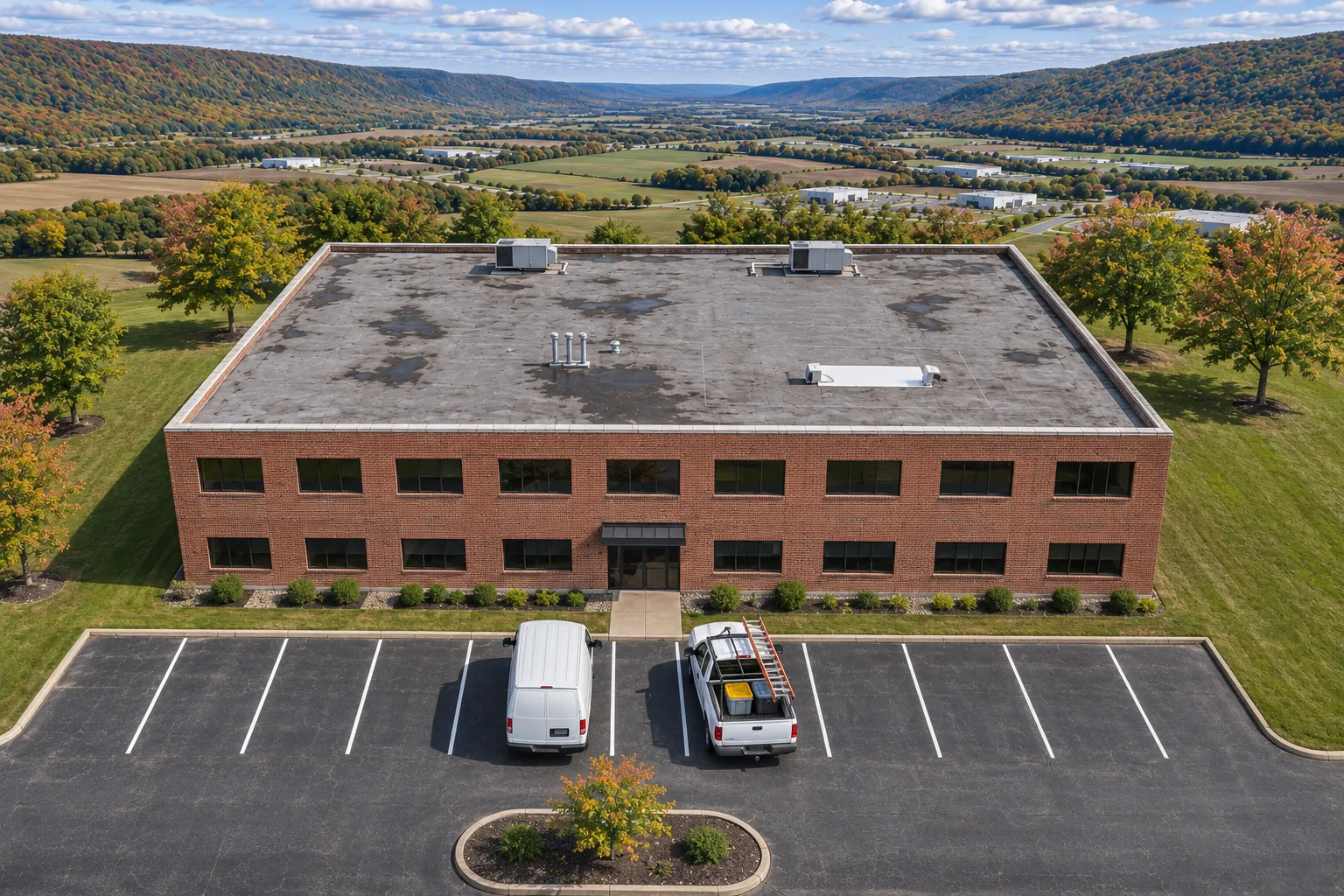
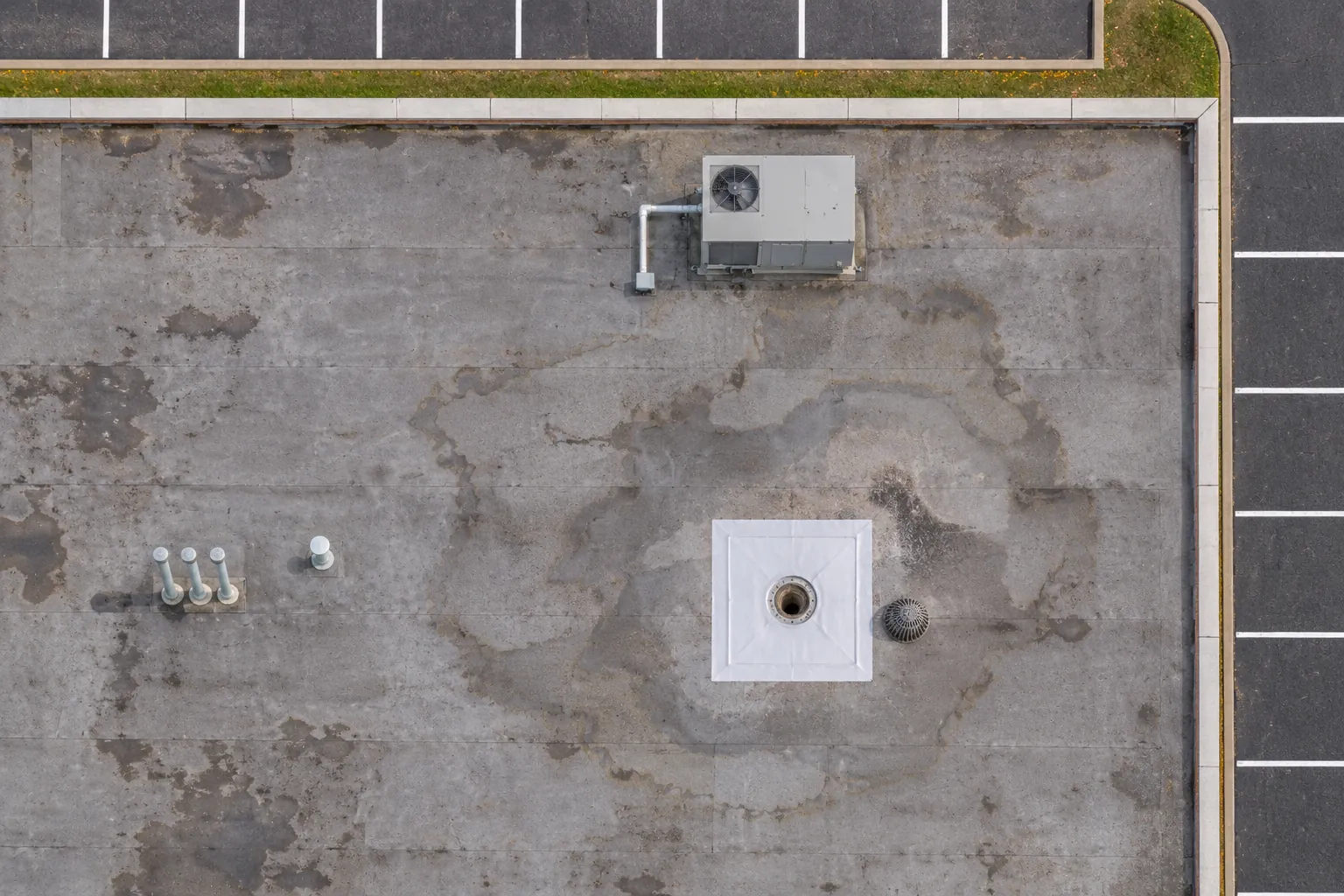
Featured RepairFlat Roof Repair
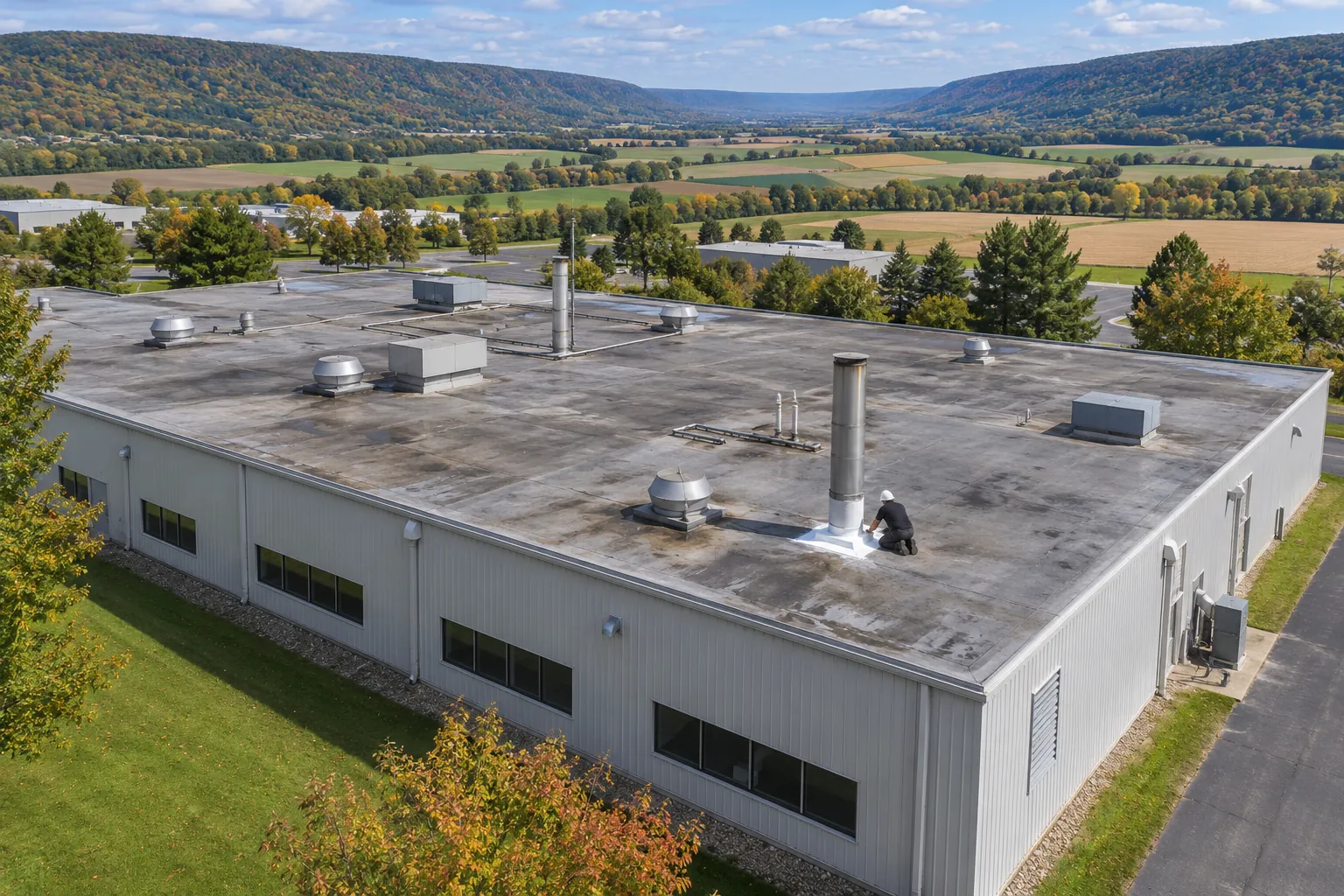
Membrane and built-up roofs with split seams, blisters, or water ringed around a drain. We cut out wet areas, patch into firm material, and rebuild drain and edge details.
Flat roof repair detailsAs a State College commercial roof repair contractor, we trace leaks to their source and repair flat, metal, and plant roofs one section at a time.
Most State College commercial roof repair calls start with one leak. What the roof shows under that leak decides whether a patch, a new section, or a new roof makes sense.
| What We Check | Spot Repair | Section Replacement | Full Replacement |
|---|---|---|---|
| Insulation | Dry around the leak | Wet in one bay or area | Wet across much of the roof |
| Seams and laps | One open seam or lap | Several failing in one area | Opening across the field |
| Drains | Clogged strainer or loose clamp ring | Sagging deck around the bowl | Ponding at drains roof-wide |
| Old patches | Few, still bonded | Stacked layers in one zone | Patches over most seams |
| Deck | Firm under foot | Soft or rusted in spots | Damaged in many bays |
Four steps take a repair from the first call to a closed roof. The inspection sets the scope, so the price matches the damage.


Start inside: we note where the ceiling stain or drip shows, then walk the roof above it, checking seams, curbs, drains, and flashing along the path water can travel.
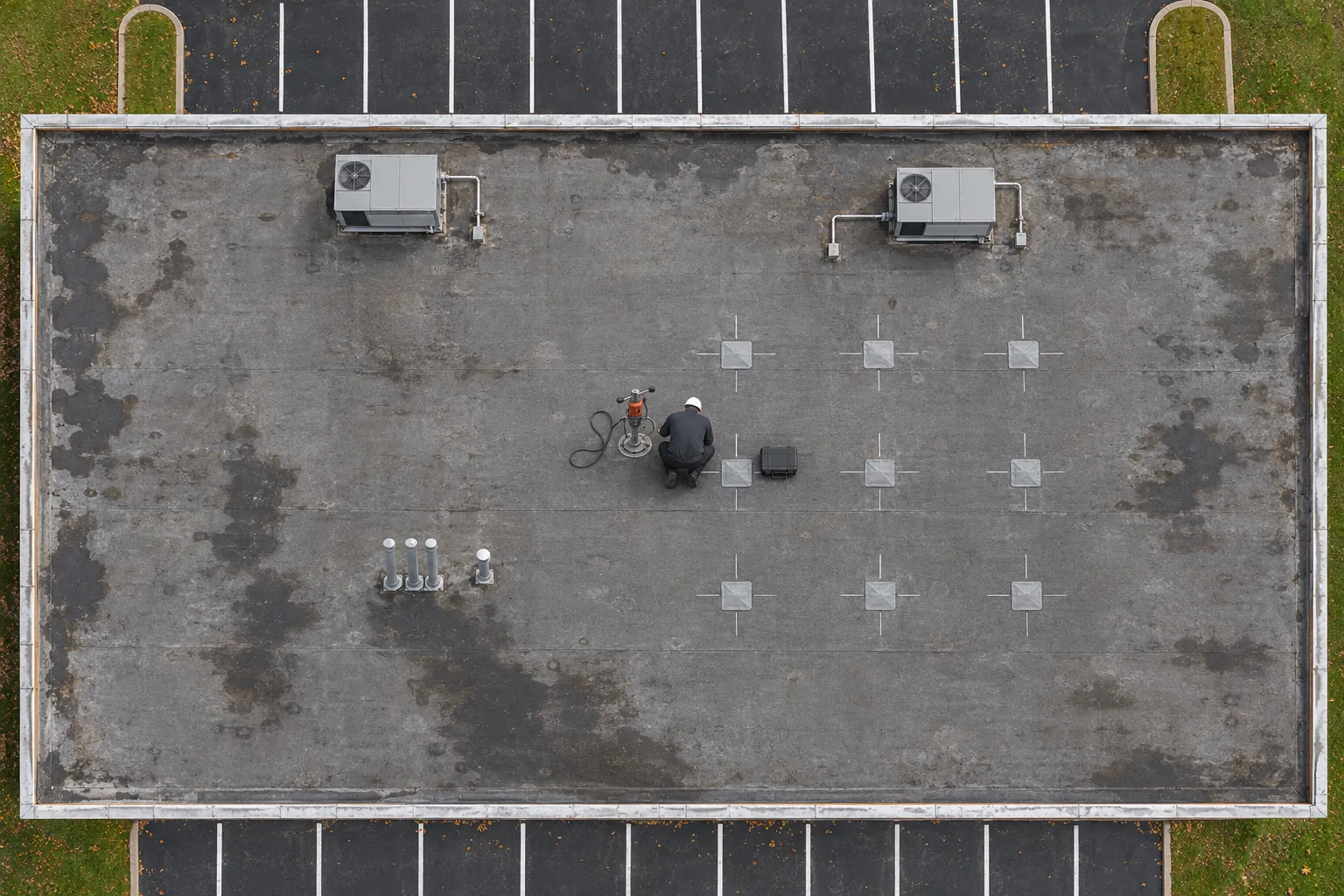
Core cuts and a moisture meter show whether the insulation under the membrane is dry. Wet boards get cut out, because a patch over them traps water in the roof.
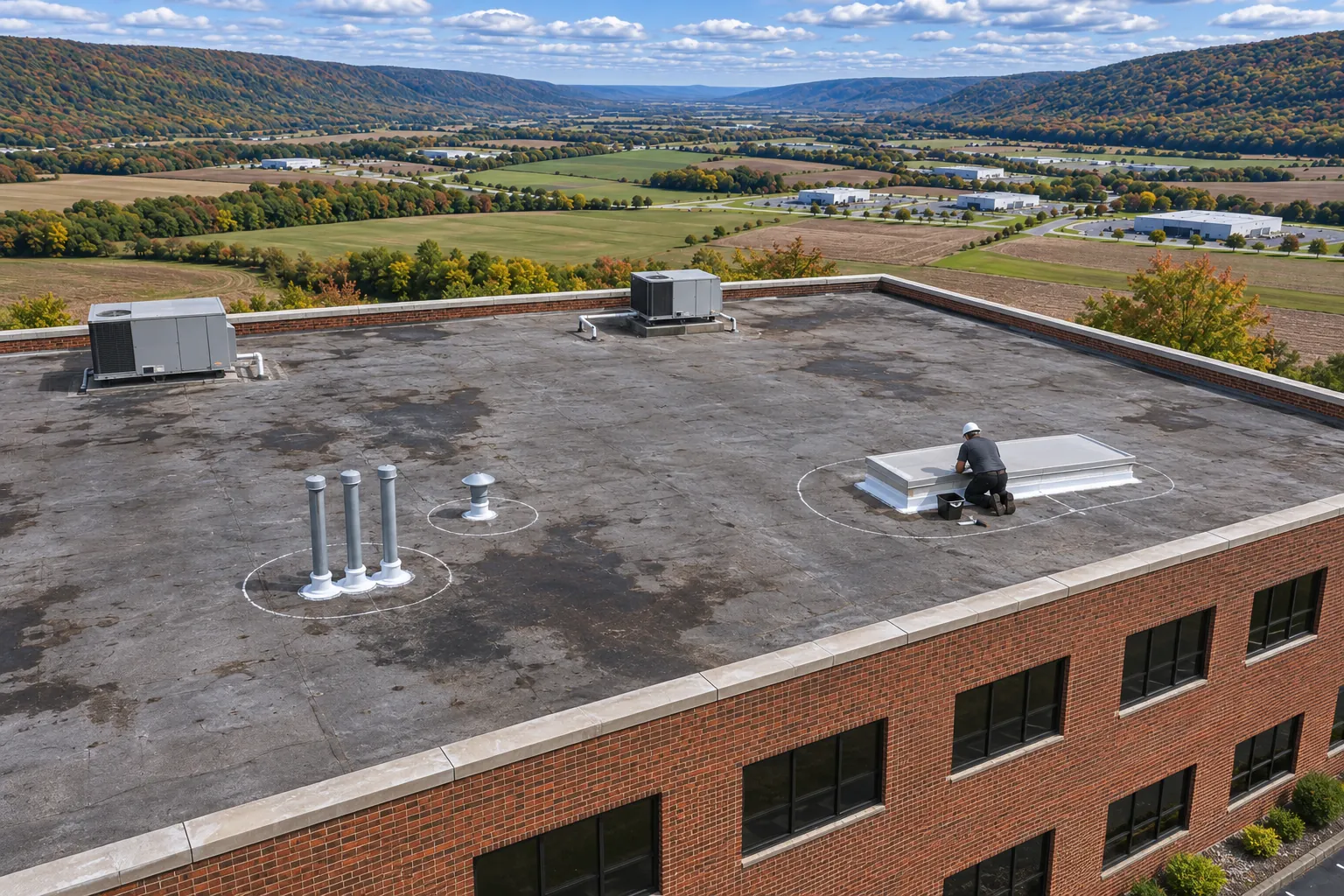
Each repair ties into firm roofing around it: a welded or adhered membrane patch, new flashing at a curb, reset panels and fasteners, or a rebuilt drain connection.
Photos of the repaired area and notes on other weak spots come to you, so the next budget covers what the roof still needs.
Four repair services cover the roofs we see most around State College. Each tile names the roof and the problem it fits.
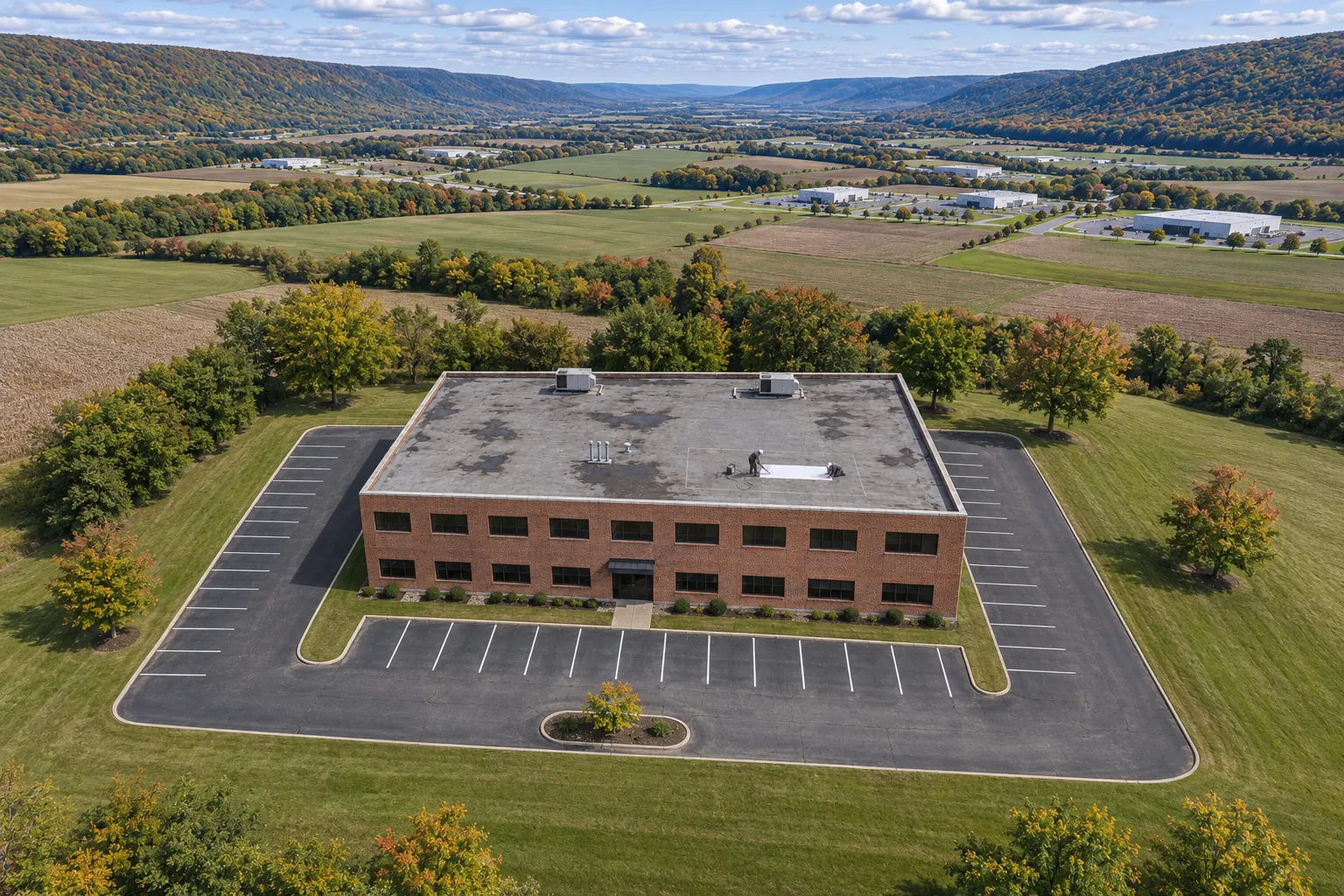
Featured RepairMembrane and built-up roofs with split seams, blisters, or water ringed around a drain. We cut out wet areas, patch into firm material, and rebuild drain and edge details.
Flat roof repair details
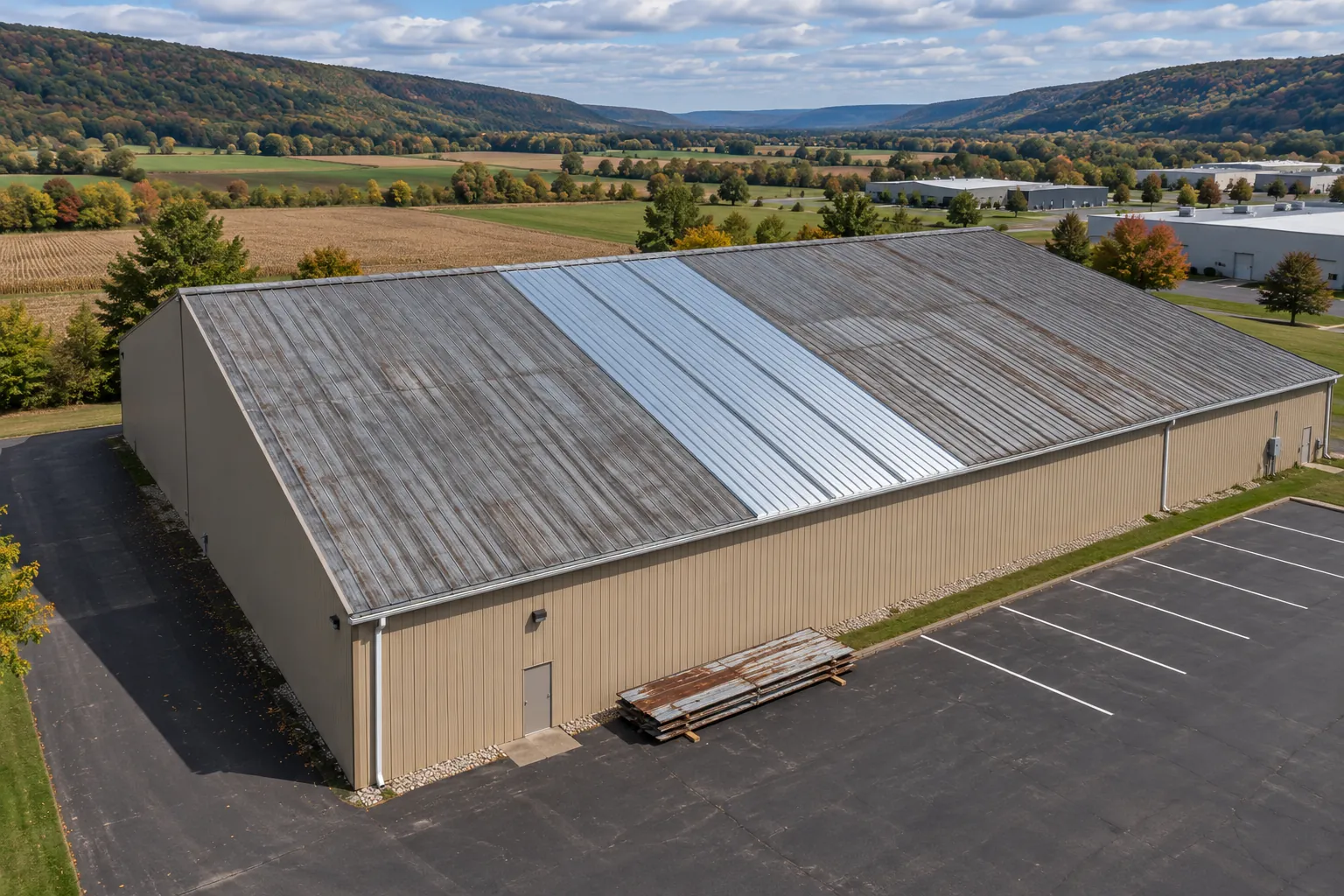
Panel roofs on shops, warehouses, and farm buildings where fasteners have backed out, laps have rusted, or a curb flashing has opened. We reset, replace, and reflash the failed parts.
Metal roof repair details
For a stain inside with no clear cause on the roof, we trace water from the ceiling up, test the likely entry points, and repair the one that is leaking.
Leak repair details
Plant, lab, and warehouse roofs with stacks, exhaust fans, and process equipment. Repairs are staged around production, restricted areas, and the air intakes near the work.
Industrial repair detailsCall and tell us where the water shows and what sits below it. We set up roof access and start tracing the leak from the stain upward.
What To Have ReadyA repair made at the right boundary keeps the rest of the roof working. These are the gains owners and facility managers see.
Wet boards come out at the repair, so the insulation around it keeps holding heat.
Old patches that no longer stick are removed instead of buried under a new one.
Rebuilt drain connections let water leave the roof instead of ponding around the bowl.
Tenants, labs, and offices stay in use because work is staged one section at a time.
Photos and notes of each repair give the next roof inspection a starting point.
Weak areas found during the repair go on a list you can budget for later.
Flashing at rooftop units and hatches is rebuilt to move with the curb.
Stopping water at the membrane keeps the steel or wood deck from rusting or rotting.
These six conditions bring most repair calls from offices, retail centers, labs, and farm buildings. Each one points to a different fix.
Seams pull apart when the membrane shrinks or the adhesive ages. Water runs along the opening and drips well away from it, so we probe the full seam line before cutting in a patch.
Standing water that stays two days or more points to a clogged strainer, a loose clamp ring, or a deck that has sagged around the bowl. Each needs a different repair at the drain.
Rooftop units and hatches shift as they run and as the roof moves. Flashing that cracks at the corners lets water into the curb wall, and it shows up as a stain near the unit below.
Summer storms can bruise membrane, crack seams, and dent metal without leaving holes. We separate cosmetic marks from damage to the water barrier, and the repair follows what the roof shows.
A cap joint that opens lets water run behind the wall flashing. The leak looks like a roof leak, so the cap and wall get checked before the membrane below is patched.
Melting snow reaches seams and edges that ordinary rain misses. Drips that start days after a storm usually trace to blocked drains, ice at the edge, or water held in the insulation.
We take commercial roof repair work in State College and five towns nearby. Outside them? Call us or send us a message.
| Town | County | What We See On Roofs There |
|---|---|---|
| State CollegeHome Base | Centre | Research office parks, retail centers, and labs with membrane roofs and busy rooftop units. |
| St. Marys | Elk | Retail roofs shared by several tenants, where one leak can cross a dividing wall. |
| Lewistown | Mifflin | Farm and equipment buildings with metal roofs over stored feed and machinery. |
| Bellefonte | Centre | Older office buildings with abandoned cable openings and patched penetrations. |
| Clearfield | Clearfield | Commercial roofs with repeat leaks, where repair records show what came back. |
| Punxsutawney | Jefferson | Retail centers with shared gutters carrying runoff from several roof sections. |
Short answers to what State College owners ask most about repair scope, storms, and leaks.
Often, yes, as long as that section has its own drains and edges. Before setting the boundary, we look at shared drains, roof transitions, and wet insulation that runs past the tenant line. Walls inside the building rarely split the roof assembly, so the repair edge follows the membrane and deck while the lease map guides access and notice.
It should tell you whether the small leaks share one cause. We map each leak against seams, rooftop equipment, and drains, then check the insulation for moisture. The report marks which areas are solid enough to patch and where a wider repair would stop the leaks from coming back.
Start with the covering, the seams, and the flashing at equipment curbs, and plan roof access around the sensitive gear inside. Dents and scuffs get sorted from damage that reaches the water barrier, and the repair plan follows those findings. Insurance coverage depends on your policy and the cause, so hail marks alone settle nothing.
Yes. Water that sits beside a parapet freezes, expands, and works open a patch that was barely holding. We look at the roof-to-wall joint and at the materials under the old patch first. Wall leaks and building movement can be part of the cause, so stretching the membrane repair farther is rarely the whole answer.
Hold off on routine repair until someone checks access and looks for signs of structural strain. Knowing where a leak sits tells you nothing about whether the path to it is safe to walk. A structural review can come first, and your own building procedures cover the occupied rooms below.
People and research come first, handled through your facility procedures for wet labs and equipment. Then we need safe roof access and the details of when and where water appeared. A temporary seal can stop water during the storm, but the source still has to be found, and a full repair usually follows.
Yes. Ice in a gutter can push water back over the edge or along the fascia, so it shows up far from where it entered. Once it is safe to go up, we trace the path across the roof edge and inside along the framing. The repair boundary follows that traced path rather than the nearest stain.
Warm, moist air in an older brick building condenses on cold roof decks and pipes and drips like a leak. We compare when the water shows with the weather, including any summer storm damage, and with what the roof inspection finds. The fix depends on whether roof entry, wall moisture, or indoor humidity is behind it.
Tell us where the water shows and how to reach the roof. We inspect it, explain what failed, and repair it.