Stack and Vent Flashing
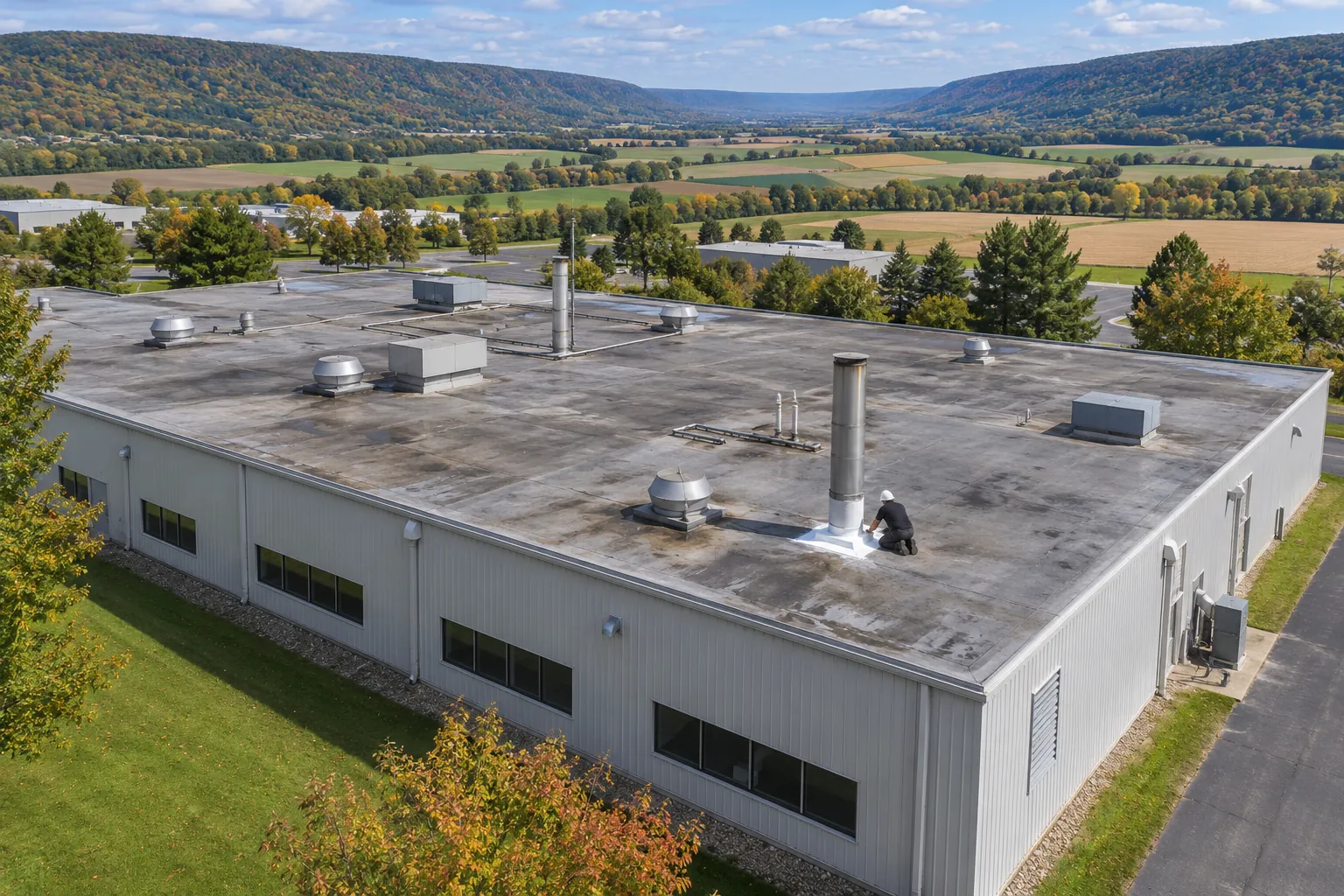
Heat, vibration, and process exhaust crack the flashing at stacks and vents. Water runs down the stack into the plant, so each base gets new flashing tied into firm membrane.
As a State College industrial roof repair contractor, we repair stacks, drains, curbs, and membrane on plant and lab roofs, staging work around production below.
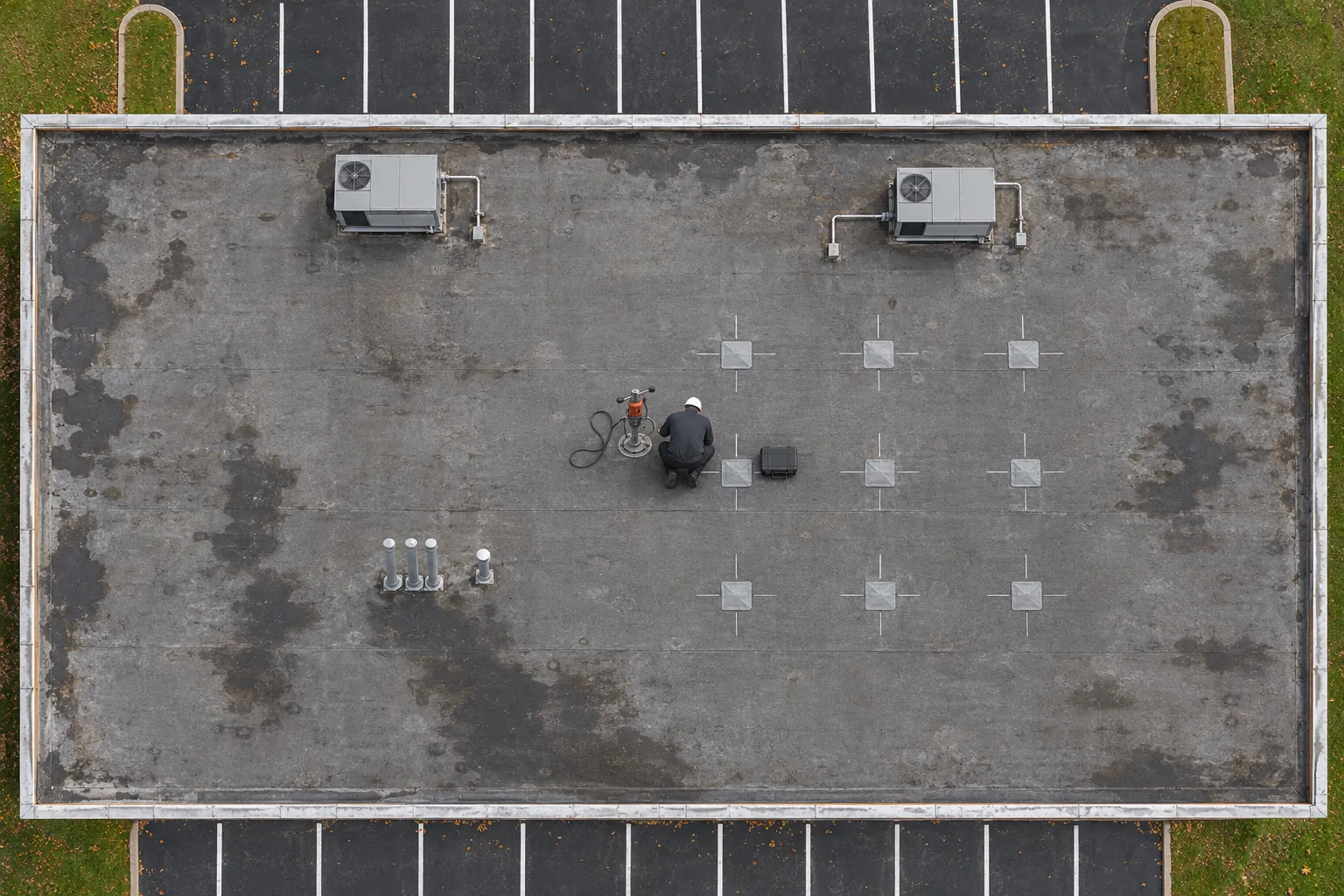
State College industrial roof repair is scoped by what sits under the roof as much as by the damage. The table compares a targeted repair with replacing a section.
| Factor | Targeted Repair | Replace a Section |
|---|---|---|
| Penetrations | A few stacks or curbs leaking | Many openings failing together |
| Insulation | Wet only near the leak | Wet across a production bay |
| Drains | Bowl and nearby roof repaired | Deck sagged across the drain area |
| Shutdown window | Work fits around shifts | Planned outage needed |
| Air intakes | Intakes can be protected | Intakes need shutting down |
Plant roofs carry more openings and heavier traffic than most. These six conditions lead most of our industrial repair calls.
Heat, vibration, and process exhaust crack the flashing at stacks and vents. Water runs down the stack into the plant, so each base gets new flashing tied into firm membrane.
Drains on big roofs carry water from wide areas. A loose clamp ring or a sagging deck around the bowl leaves water standing, and the wet roof around it gets repaired with the drain.
Fans shake their curbs loose over time, and grease or residue softens some membranes. We reflash the curb and check the membrane around it.
Maintenance staff walking to units wear paths through the membrane. Worn paths get patched, and walkway pads can follow once the area is repaired.
Moist plant air and long-running leaks rust steel decks from below. Soft spots under foot get checked before any repair is closed over them.
Clean rooms, labs, and sensitive processes limit when and how the roof can be opened. The repair plan follows those limits along with the roof condition.
These items set the price after an on-roof inspection of the plant roof, so the estimate reflects the real work involved.
| Cost Factor | What We Measure | Why It Matters |
|---|---|---|
| Leak tracing | Number of entry points found | Sets how many details get repaired |
| Wet insulation | Area confirmed by core cuts | Wet boards are cut out and replaced |
| Penetrations and drains | Stacks, curbs, and drains involved | Each needs its own flashing work |
| Access and sequencing | Shifts, intakes, restricted zones | Protection and staging add time |
A repair planned around operations keeps production running while the roof is fixed.
Staged work and protection below keep lines running during roof repair.
Work near air intakes is timed or shielded so fumes and dust stay out.
Rebuilt drain areas move water off large roof sections after storms.
New flashing at stacks and curbs closes the most common plant leak points.
Call and tell us what runs below the leak. We plan access with your facility contact and protect the area before opening the roof.
What To Have ReadyFour steps coordinate the repair with the people who run the building.
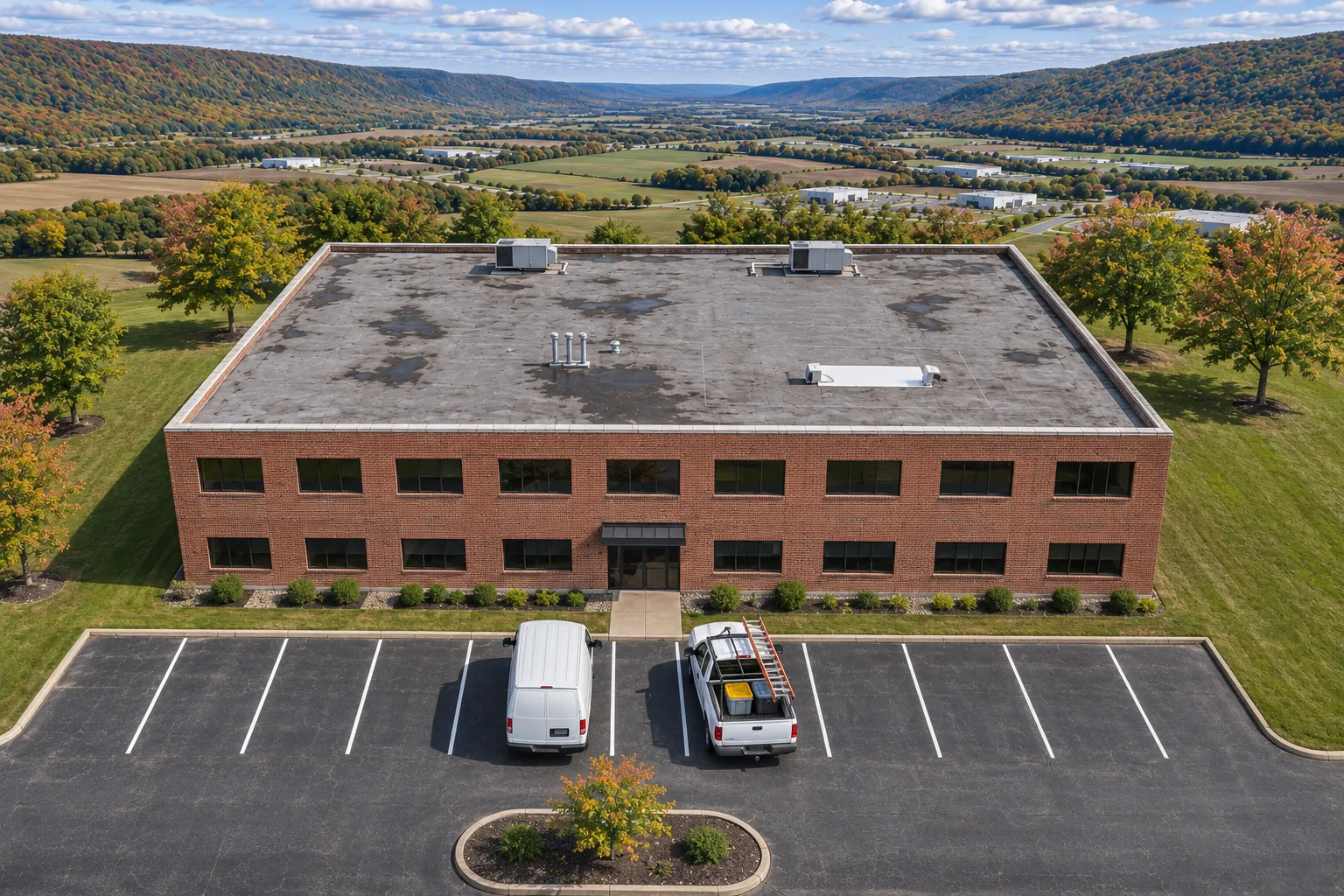
Access rules, restricted areas, shift times, and intake locations get set with your facility contact before anyone opens the roof. We confirm who signs off on each area.
Leaks are traced to their source, and core cuts show how far water has spread in the insulation and where the repair edge belongs.
Debris, water, and dust protection go in below the work area. Where that protection is impractical, the sequence changes instead.
Every opened area is repaired and closed before the crew leaves, and drain areas are rebuilt with the roof around them.
Large buildings combine several roof types and problems.
Large flat sections on plants get seam, blister, and drain repairs between the stacks.
Metal warehouses and process buildings need fastener and lap repairs of their own.
When water appears far from any stack, a leak trace finds the true entry point.
Answers on cost, restricted areas, shutdowns, and drains.
An on-roof inspection sets it, because the damage and the access needs define the work. We weigh leak tracing, the roof system, how big and how many the damaged areas are, core-cut evidence of wet insulation, flashing, drains, and repair versus a replaced section. Protection and sequencing then follow that scope and your operating rules.
Yes. Large plant roofs are usually repaired one section at a time, set by drains, expansion joints, or the areas above each process. Each section is opened, repaired, and closed before the next one starts, which keeps most of the building covered.
They need the access rules and the protection required under the work area. We meet with your facility representative before inspecting or opening any section. Equipment schedules, intake locations, and sensitive processes shape the order of work, while the repair itself still follows what the roof and the materials beneath it show.
Sometimes, when the work and the production floor can be separated and protected. We go over debris, water exposure, and access with your staff before choosing a method. If that protection cannot be held in place, the plan shifts to a different sequence or operating arrangement.
When your operation needs it and the roof can be worked safely. Night work needs lighting and a clear plan for access, and some materials need daytime temperatures to set. We plan the timing with your facility contact once the repair is scoped.
Wet or sunken roofing around the bowl can undermine a new drain connection. We check the insulation, the deck, and how the membrane is attached near the drain before rebuilding it. Fixing only the fitting can leave water standing on the roof or hide decay that keeps spreading.
Each spring and fall at least, and after big storms. Plant roofs collect dust, grease, and debris that clog strainers faster than an office roof. A quick look at strainers and clamp rings catches ponding before it reaches the seams or the deck.
Tell us what runs under the leak and who manages access. We plan the repair around your operations and fix the roof.