Split Membrane Seams
Heat welds and seam tape age at different rates. A seam that lifts at one end pulls water under the sheet, so we probe the whole seam and weld or tape new cover strips over clean, dry membrane.
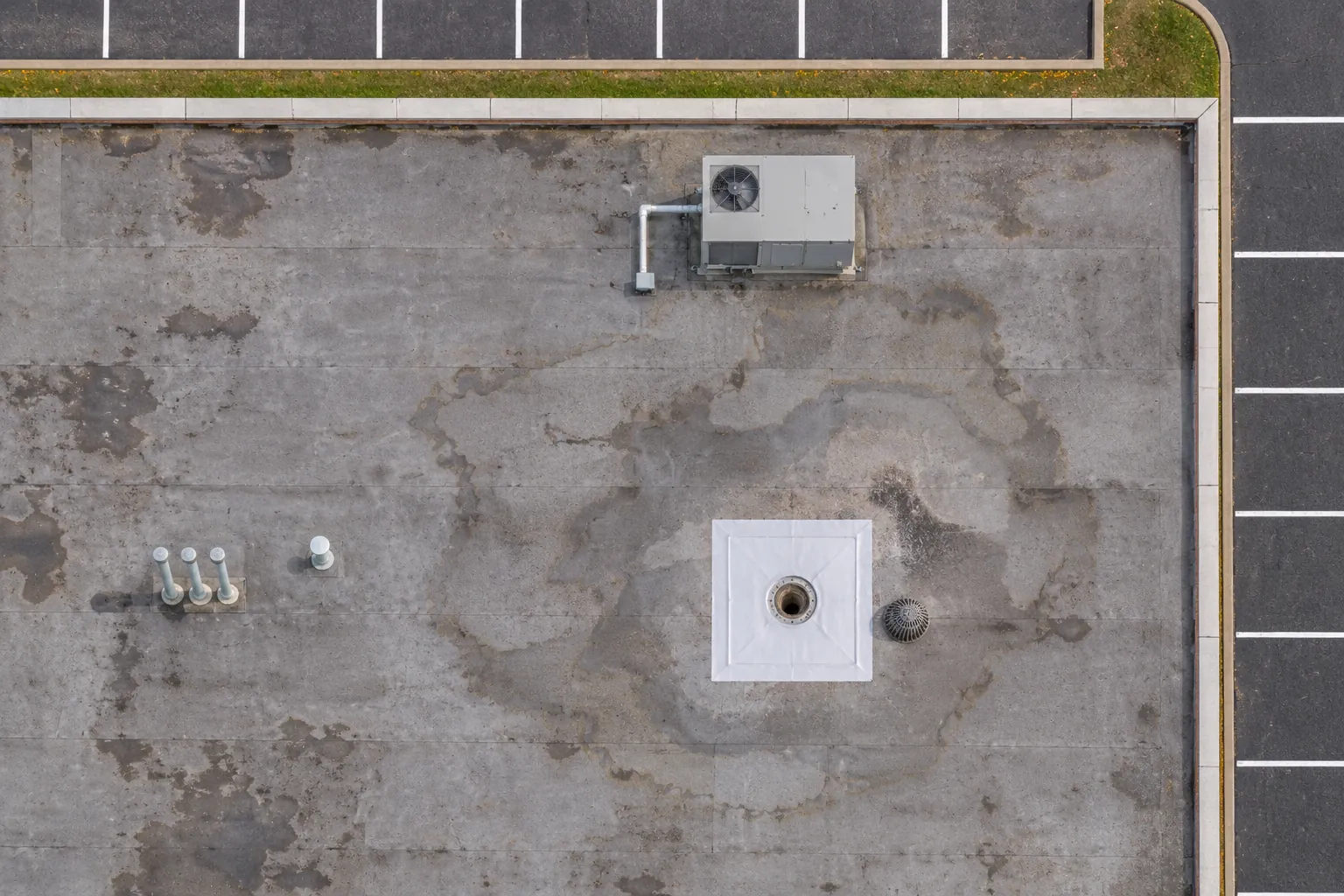
As a State College flat roof repair contractor, we fix split seams, blisters, and leaking drains on membrane and built-up roofs, cutting out wet areas before patching.
State College flat roof repair works when the damage is local and the material around it still holds a patch. The rows below show what we look at before choosing.
| Roof Sign | Repair Fits | Look at a New Section |
|---|---|---|
| Seam openings | One or two short runs | Seams opening along whole rolls |
| Insulation | Dry past the repair edge | Wet across a bay or more |
| Past patches | Still bonded and compatible | Mixed materials that peel |
| Ponding | Low spot at one drain | Water across large areas |
| Deck | Firm under the leak | Soft, rusted, or sagging |
Six conditions cover most flat roof calls. Each card names what you see and where the repair starts.
Heat welds and seam tape age at different rates. A seam that lifts at one end pulls water under the sheet, so we probe the whole seam and weld or tape new cover strips over clean, dry membrane.
Blisters form where trapped air or moisture lifts the top layers. A firm, dry blister away from foot traffic can be watched, while a soft or cracked one gets cut open, dried, and patched.
Strainers fill with leaves and grit, clamp rings loosen, and decks sag around the bowl. Water that rings a drain for days tells us which of those to open up first.
Layers of mastic and mismatched patch material trap water between them. We remove what has lost its grip and tie the repair into the original membrane underneath.
Soft spots under foot and stains far from any seam point to wet boards. Core cuts confirm it, and the wet area is cut out and replaced before the membrane is closed.
Flashing at parapets and roof edges shrinks and pulls away from the wall. Water then enters above the membrane, so we reattach or replace the flashing and check the coping above it.
The repair method follows the membrane already on the roof, because matching materials keeps the patch in place.
| Roof System | Repair Method | What We Check First |
|---|---|---|
| TPO | Heat-welded patch over cleaned membrane | Whether the aged sheet still welds |
| EPDM | Primed and taped patch or cover strip | Seam adhesive and shrinkage |
| Built-up | Cut out, dry, and rebuild the plies | Gravel, felt layers, and moisture |
| Modified bitumen | Torched or cold-applied patch | Granule loss and lap adhesion |
A repair that stops at firm roofing keeps the rest of the membrane in service.
Rebuilt drain connections and cleared strainers move water off the roof after rain or snowmelt.
Cutting out wet boards keeps the roof holding heat through central Pennsylvania winters.
Removing failed layers leaves one well-adhered patch you can inspect later.
Repairs run one roof area at a time, so tenants below keep working.
Call with the roof size and where water shows inside. We plan access and check the drain and seams first.
What To Have ReadyFour steps take a flat roof from leaking to closed, with the wet area found before anything is cut.
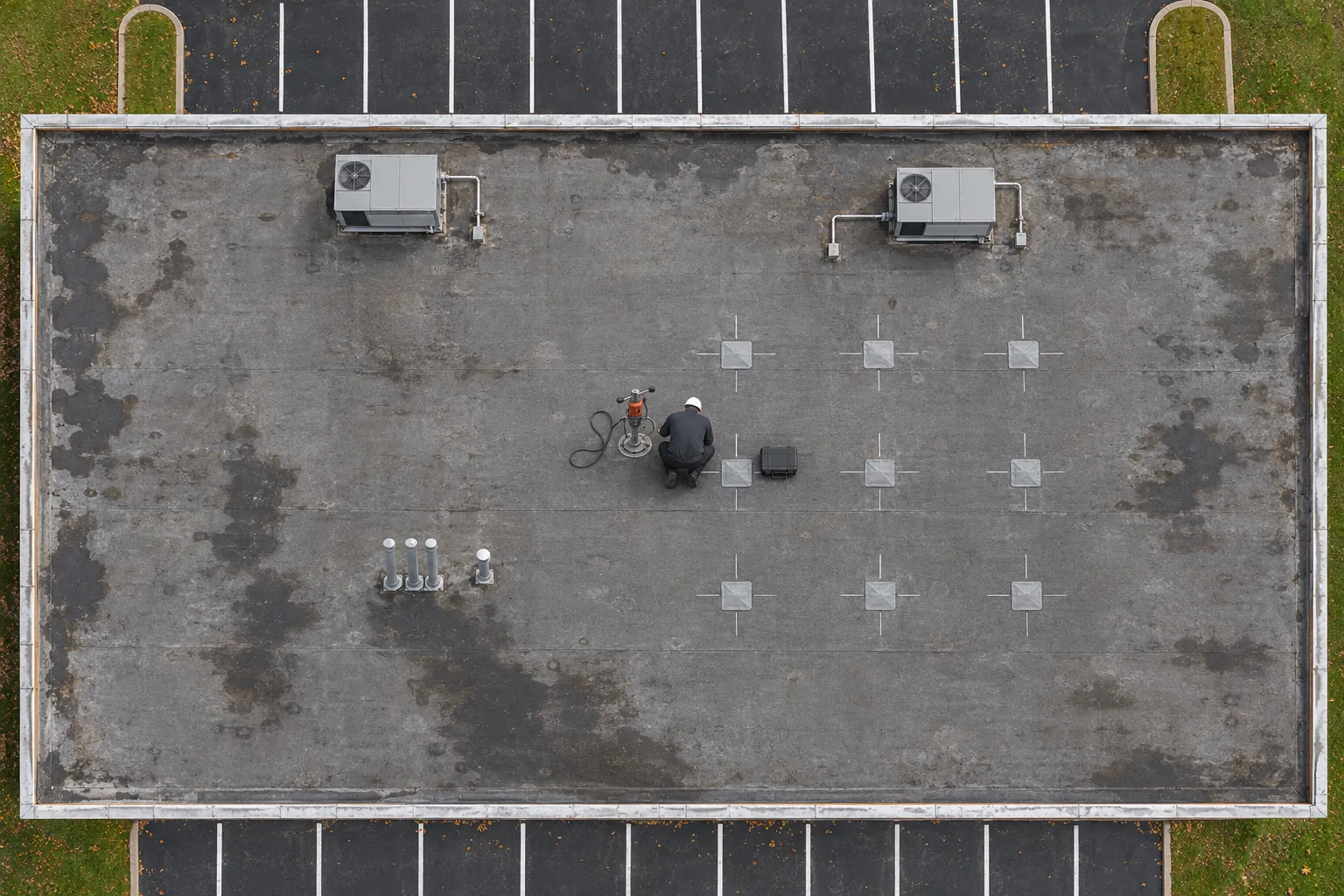
Mark every seam opening, blister, and patch on a roof sketch, then compare them with the leak spots you see inside.
A small core and a moisture reading show how far water has spread under the membrane, and that sets the repair edge.
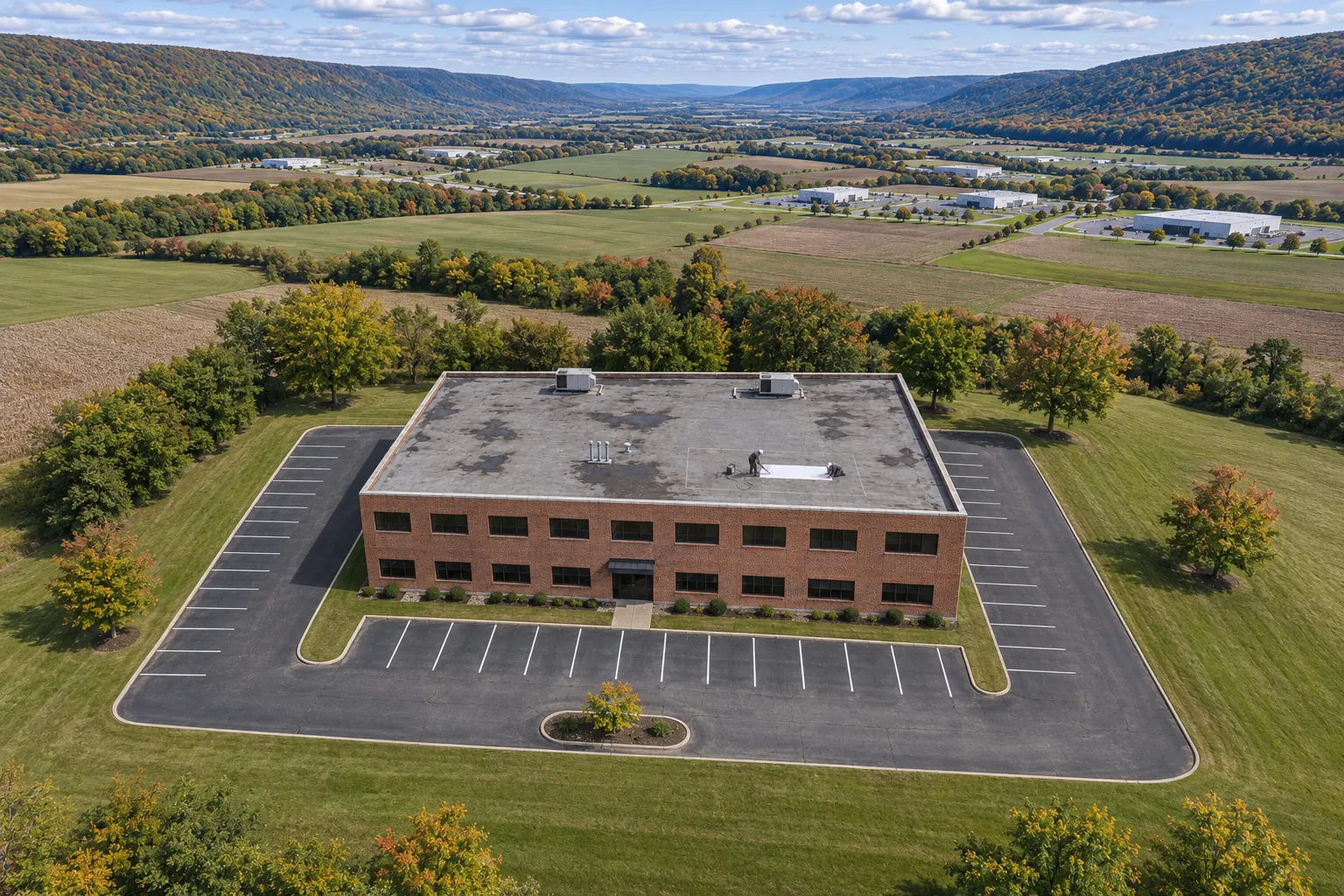
Cut away wet insulation and failed layers, replace them, and fasten new cover board flush with the roof around it.
Weld, tape, or torch the new membrane onto clean material beyond the damage, then probe every lap before leaving.
Flat roofs often share problems with the systems around them.
When a stain sits far from any seam, leak tracing finds the path before the patch goes on.
Plant roofs with stacks and exhaust fans need flat roof repairs staged around production.
Metal additions and canopies tied into a flat roof get their own panel and flashing repairs.
Answers on cost, old patches, blisters, and winter work.
An on-roof inspection sets the price, since the damage and the shared roof conditions decide the work. We trace the leaks, count and size the damaged areas, take core cuts for wet insulation, and check flashing, drains, and access. The scope then separates a local repair from replacing a section, whatever the number of tenants affected.
First identify the original roof system, then prepare a clean repair area. We test how well the old patches still stick and remove anything unable to carry the new detail. The new repair connects to firm original roofing and fixes the damage underneath, instead of adding one more uncertain layer on top.
Match the repair to the membrane. TPO is heat-welded, EPDM is primed and taped, and built-up roofs get their plies cut out and rebuilt. Whatever the system, wet insulation underneath comes out first and the patch extends onto clean, dry membrane, so it grips instead of floating over damage.
Check it before the walkway goes in. We look at the roof system, the surface, and any moisture under the blister to decide whether it needs repair now. Foot traffic concentrated on a weak spot can break it open, so walkway pads are placed after the blister is dealt with, never as a cover for it.
Sometimes. A repair can go on between snowfalls when the roof is safe to reach, the surface is dry, and the material temperature limits are met. A short break in the weather is often too brief, so a temporary seal can hold until conditions allow the full repair.
That turns on the roof around it more than on the patch. A repair on firm, dry membrane with good drainage lasts as long as that membrane does, while a patch next to wet insulation or ponding water wears faster. We tell you what condition the surrounding roof is in.
Send the address and where water shows. We inspect the membrane, find the wet area, and repair it into firm roofing.