Backed-Out Fasteners
Panels expand and contract every day, and over the years screws work loose and their washers crack. Each loose screw is a small leak at the rib, and whole rows of them let panels lift in wind.
As a State College commercial metal roof repair contractor, we reset fasteners, replace rusted panels, and rebuild curb and hatch flashing on shops, warehouses, and farm buildings.
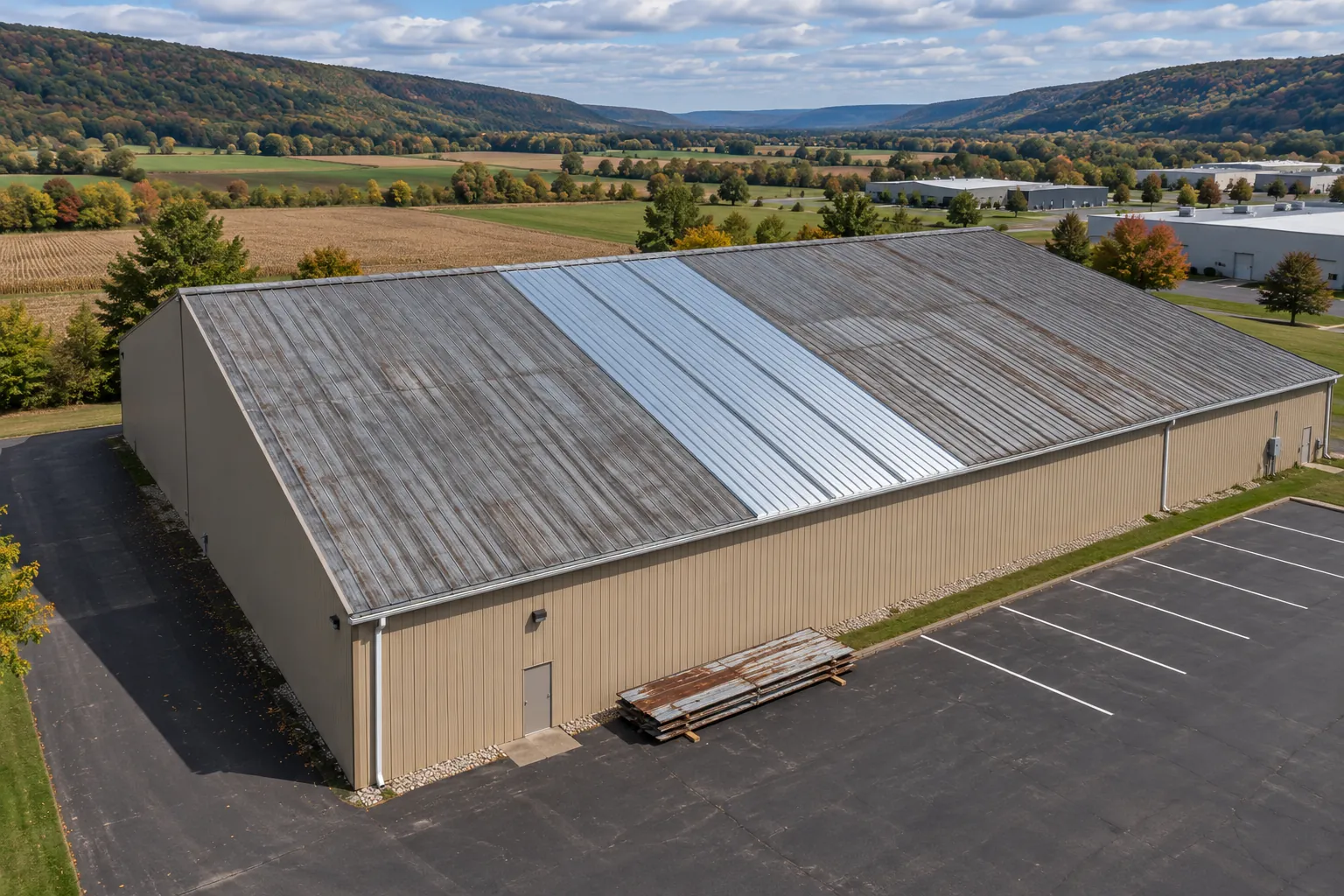
State College commercial metal roof repair makes sense while the panels and purlins still hold a fastener. The table shows where repair ends and new panels begin.
| Roof Sign | Repair Fits | Look at New Panels |
|---|---|---|
| Fasteners | Backed out, holes still tight | Holes wallowed or purlins weak |
| Rust | Surface rust at the laps | Rust through the panel |
| Laps and seams | Sealant failed at a few laps | Laps open across the roof |
| Curbs and hatches | Flashing loose at one opening | Curb framing rotted or bent |
| Hail | Dents with tight seams | Seams and laps cracked open |
Metal roofs fail at their connections more often than in the open panel. These six conditions start most of our metal repair work.
Panels expand and contract every day, and over the years screws work loose and their washers crack. Each loose screw is a small leak at the rib, and whole rows of them let panels lift in wind.
End laps and side laps hold water longest, so rust starts there. Light rust gets cleaned and sealed, while rust that has eaten through means that panel comes out.
Curbs for fans, units, and hatches leak where the flashing meets the panel ribs. We rebuild the curb flashing so it sheds water and moves with the roof.
Hail can crack seams and flashing without punching a hole. We check the joints and connections and keep dents that only look bad apart from damage that lets water in.
Ice and debris at the eave push water back under the panel ends. Closures, eave trim, and gutter fastening all get checked along the low edge.
Drips on a cold morning can come from condensation under the panels rather than a leak. Timing the drip against the weather helps tell the two apart.
Repair methods change with the panel profile and how far the attachment has failed.
| Problem | Repair Method | What We Check First |
|---|---|---|
| Loose fasteners | Oversized screws with new washers | Hole size and purlin condition |
| Rusted panel | Replace the panel with a matched profile | Rib shape and lap direction |
| Open laps | Clean, seal, and restitch the lap | Rust inside the overlap |
| Leaking curb | New curb flashing and a cricket | Curb height and framing |
| Cracked skylight panel | Replace with a matched clear panel | Rib profile and fastener spacing |
Fixing the connections keeps a metal roof in use for more seasons.
Reset rows of screws hold the panels down in wind and stop leaks at every rib.
Sealed laps stop the water that feeds rust between overlapping panels.
Replacement panels follow the existing rib profile, so the laps close properly.
Feed, equipment, and stock under the roof stay dry once the openings are closed.
Call and describe the building and where it leaks. We check the fastener rows and flashing before pricing a repair.
What To Have ReadyFour steps move from finding why the panels leak to closing every opening we touched.
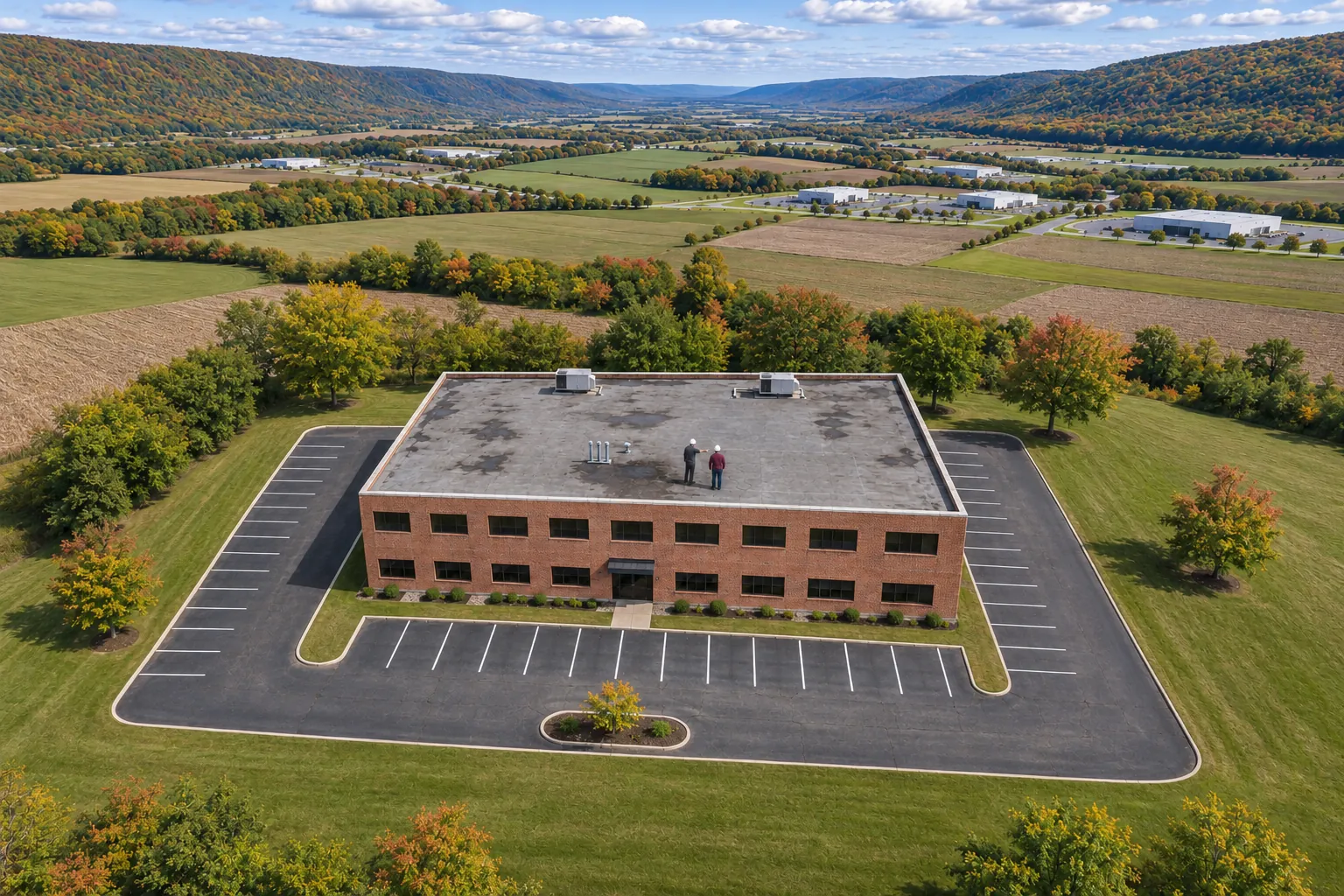
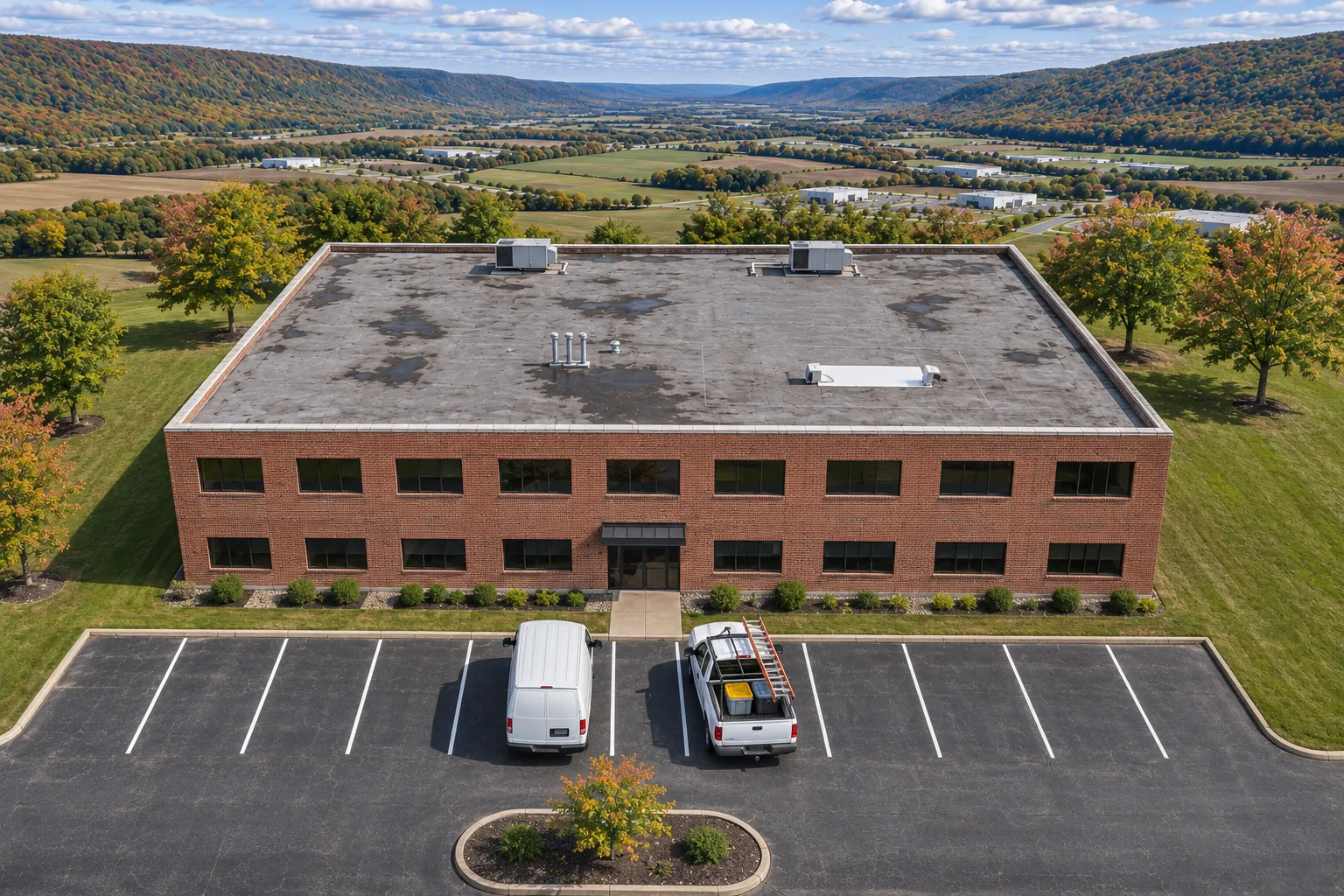
Loose rows have a cause, such as wind uplift, worn purlins, or the wrong screws. We find it before choosing new fasteners.
Screws go back into solid purlins with new washers, upsized where holes have worn. Attachment comes before any sealant.
Panels rusted through are cut out and replaced with matching profiles, lapped in the direction water runs.
Curbs, hatches, and eaves get new flashing, then every repaired lap and opening is checked by hand.
Metal buildings rarely leak in only one way.
Many metal buildings have a flat roof section or addition that leaks at the tie-in.
If water appears far from the panel you suspect, a leak trace finds the real entry point.
Plant buildings with metal roofs and process stacks need repairs planned around production.
Answers about loose fasteners, curb leaks, hatches, service life, and hail.
Yes, in most cases, when the panels and framing are still solid. Loose fasteners, rusted laps, and failed curb flashing are all repairable. New panels make sense where rust has gone through the steel or the purlins no longer hold a screw, and that can be one section rather than the whole roof.
It can be, if the panels and supports will accept new, corrected connections. We first find out why the rows moved and check the condition of each hole. The attachment is fixed before anything is sealed, because sealant on the surface does nothing to hold the roof down.
They count against the roof only as far as their cause and the damage they leave behind. We look at the flashing, the panels next to the curb, and any moisture before judging the whole roof. Details that can be corrected support keeping the roof, while widespread rust or weak connections point toward replacing more.
Attachment, rust, and upkeep decide it more than the age on paper. Fasteners that stay tight, laps that stay sealed, and curbs flashed to move with the roof all keep panels in service longer. We tell you what we see on your roof rather than a promised number of years.
Look at the curb, how it is fastened, and how the opening moves before rebuilding anything. We check the panel connection around the hatch too. A bead of sealant hides the gap without fixing why it opened, so the new flashing ties into solid material and allows for movement.
Yes. Hail can damage seams and flashing even where the panel field has no hole. We inspect the joints and connections instead of judging by dents, and the repair turns on whether those details still shed water. Cosmetic dents and damaged connections are separate findings.
Only as a short-term step. Sealant ages fast in sun and cold and hides the gap without fixing the movement or the loose fastener behind it. A lasting repair resets the attachment, replaces failed parts, and uses flashing designed to move with the panels.
Tell us about the building and where the water shows. We check the fasteners, laps, and flashing, then repair what failed.