Water Held in Insulation
Wet boards left under a patch keep dripping for weeks. The stain looks like the old leak even though the patch itself holds.

As a Clearfield commercial roof repair contractor, we investigate leaks that returned after a repair, compare your records with the earlier work, and fix the real source.
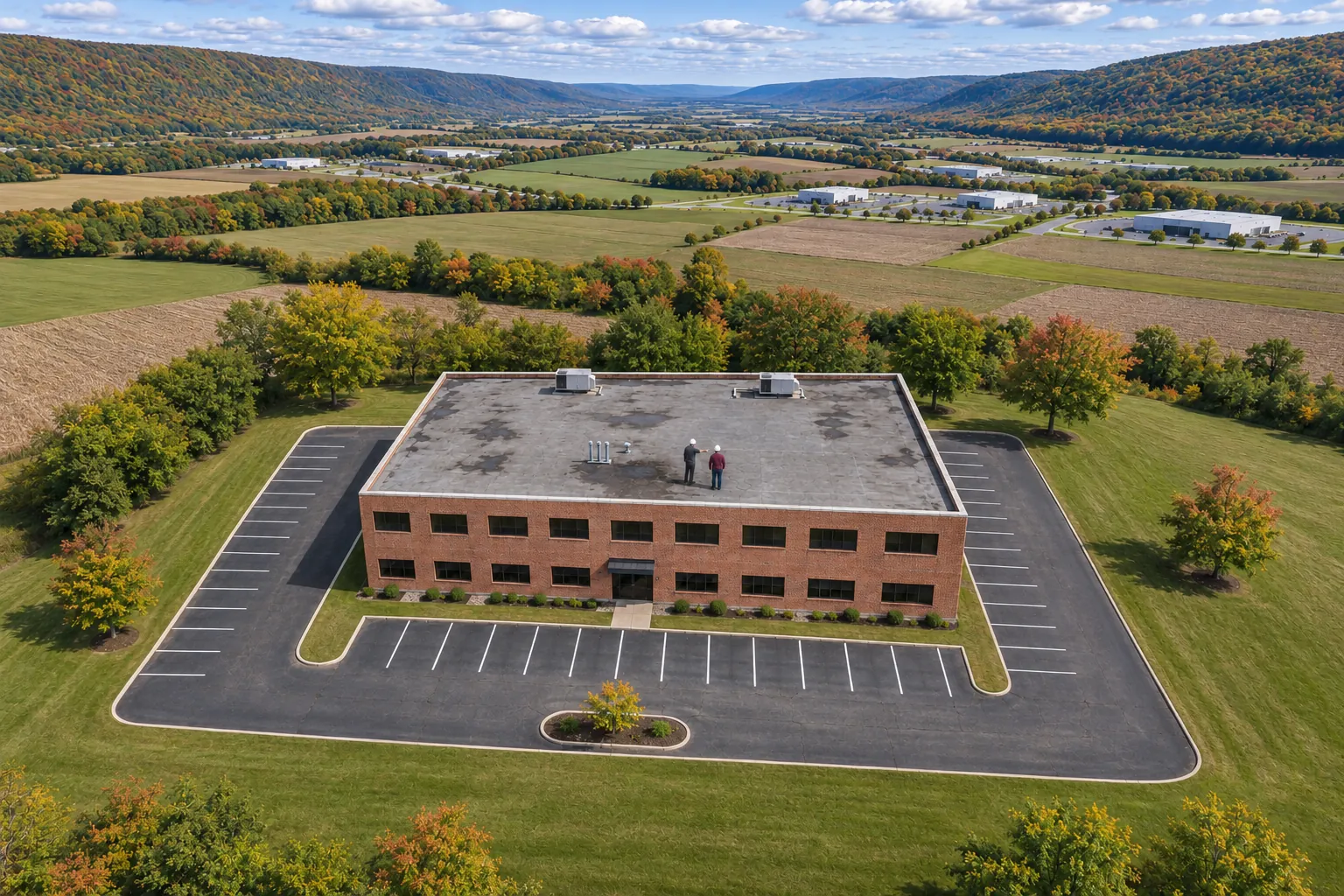
Clearfield commercial roof repair often starts with a leak someone already fixed. Before anything is cut, we find out whether the old source failed or a new one opened.
A stain in the same ceiling tile can come from a different roof opening. Water held in wet insulation, a second defect nearby, or a patch that never stuck can all look like a returning leak.
Your notes make the difference. The location, the weather, and the timing of each leak, set beside the scope of the earlier repair, point us to what actually failed. We repair that, and add the new work to your record.
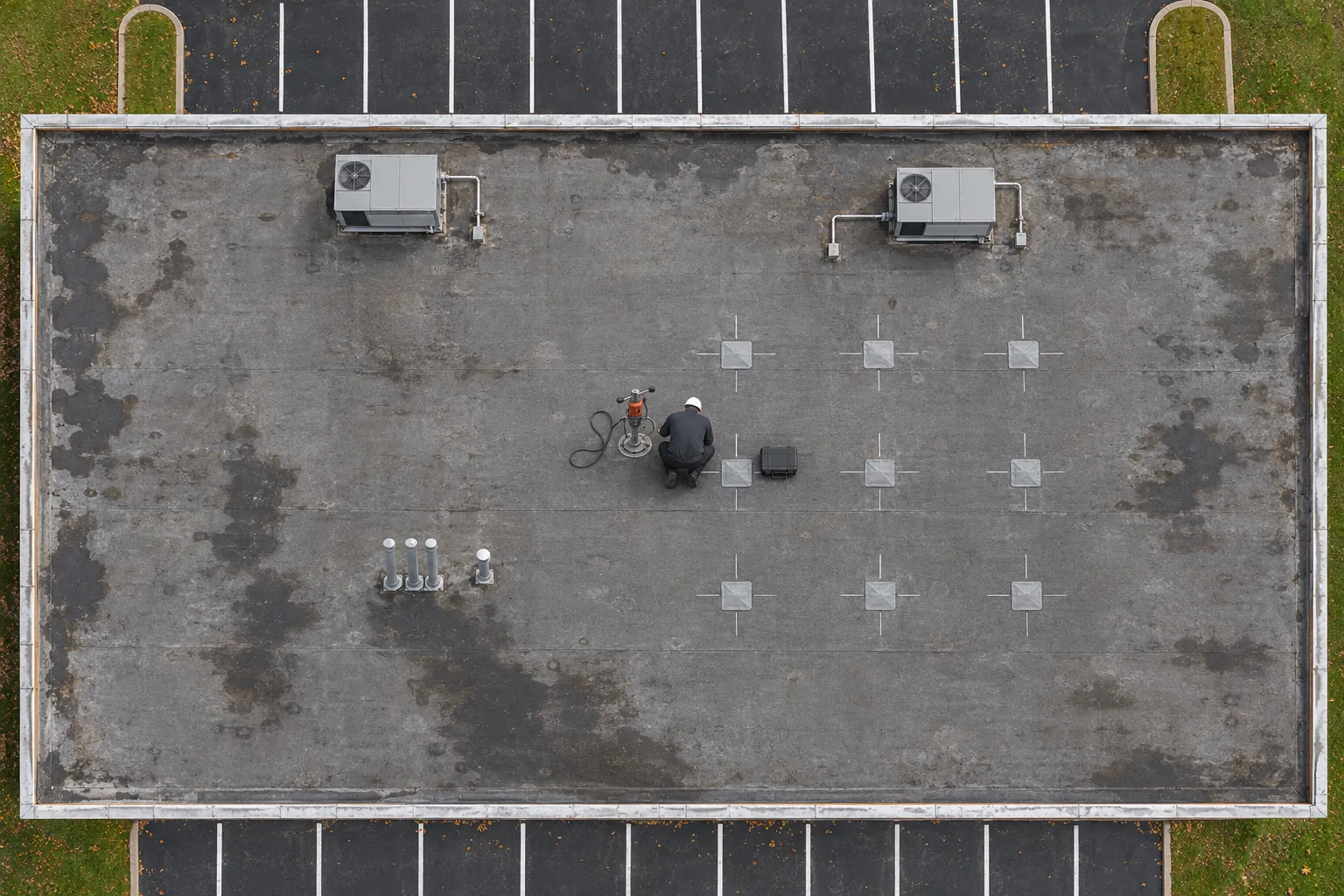
Returning leaks come from a short list of causes. These six explain most of the repeat calls we see.
Wet boards left under a patch keep dripping for weeks. The stain looks like the old leak even though the patch itself holds.
A patch over dirty or incompatible membrane lifts at its edges. Water gets under it and follows the old path to the same ceiling tile.
The original repair can hold while a seam a few feet away opens. Probing the whole area around the old patch finds it, and the new repair goes on the roof sketch.
Cleared drains fill again with leaves and grit. Ponding returns, and so does the leak at the nearest seam. Checking strainers each spring and fall keeps that cycle from repeating.
Units that shook their flashing loose will do it again if the curb itself is loose. The curb gets fastened before it is reflashed.
Winter drips that appear without rain or melt can be condensation, usually over warm, humid rooms under a cold roof deck. Records of the timing show the pattern quickly.
Good records turn a repeat leak into a short investigation.
Dates and weather on each leak narrow the search on the roof.
Comparing records with the old scope shows which roof detail actually failed.
Photos of every repair build a record for the next roof inspection.
Patterns in the record show when a roof section needs more than patches.
The fix follows the reason the leak came back.
| Finding | Repair | What We Add to Your Record |
|---|---|---|
| Wet insulation under old patch | Cut out the wet area, new patch | Core results and photos |
| Patch lifting at the edges | Remove it and patch clean membrane | Material used and adhesion check |
| New seam opening nearby | Repair the second seam | Location on the roof sketch |
| Loose curb under flashing | Fasten the curb, then reflash | Before and after photos |
| Drain clogged again | Clear the strainer and reset the clamp ring | Date cleared and debris found |
Call and bring what you have on the last repair. We compare it with the new leak and find what failed.
What To Have ReadyFour steps sort a returning leak from a new one and fix the right detail.
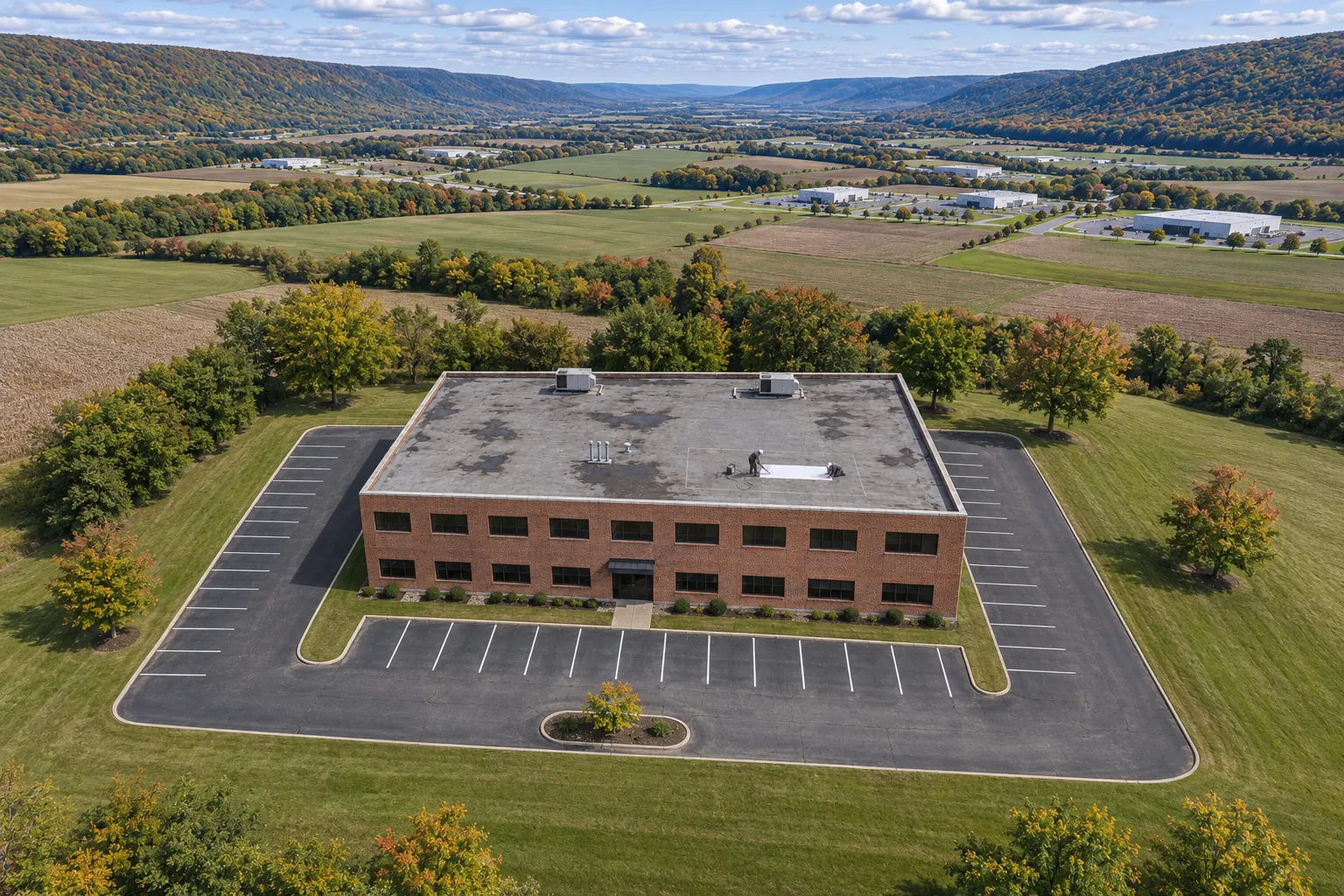
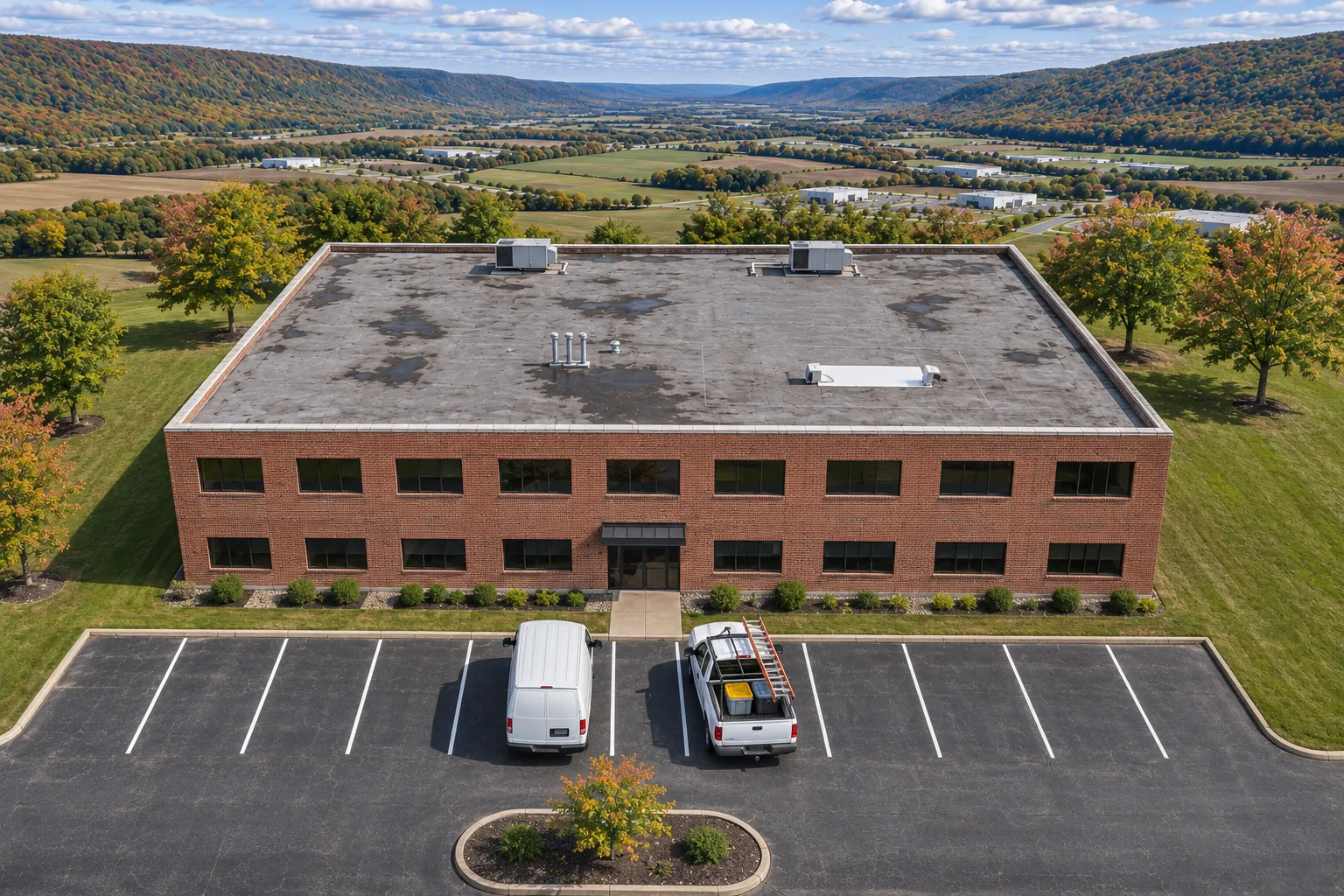
Leak dates, weather, and the earlier repair scope are read before we go up to the roof. Missing notes are fine; we start from what you have.
The earlier patch or flashing is checked for adhesion, wet edges, and movement, and compared with the earlier photos.
Seams, drains, and curbs around the old repair get probed and cored for held water.
What failed gets repaired, and your record is updated with photos and notes.
Outside Clearfield, we take commercial roof repair jobs in the five places below. For any other town, call us or send us a message.
| Town | County | What We See On Roofs There |
|---|---|---|
| State CollegeHome Base | Centre | Offices, labs, and retail roofs with crowded rooftop equipment. |
| St. Marys | Elk | Shared retail roofs where leaks cross tenant walls. |
| Lewistown | Mifflin | Metal farm and equipment buildings over stored feed. |
| Bellefonte | Centre | Older offices with abandoned rooftop openings. |
| Punxsutawney | Jefferson | Retail centers draining into shared gutters. |
Answers for owners dealing with leaks that came back.
Write down where the moisture shows, the weather, and when it appeared. We compare those notes with the scope of the finished repair and check whether the original source, water held in the roof, or a different defect is behind it. Clear notes help more than assuming the same stain means the same opening.
Three causes cover most cases: wet insulation left under the patch, a patch that never stuck to the old membrane, or a second defect close to the first. Drains that clog again can also bring back ponding and the leak with it. The inspection finds which one applies.
What the inspection finds. A lifted patch on dry insulation is a short repair, while wet insulation or several new openings take more. Records of the earlier work help us scope it faster and more accurately.
That turns on how often the same area leaks and what the cores show. One or two repairs on dry insulation favor patching. Repeated leaks over wet insulation in one bay usually cost less to fix with a new section than with another round of patches, and your records make that comparison clear.
Pick one who asks for your leak history and checks the earlier repair before patching again. Ask how they confirm the source, whether they core for wet insulation, and what record they leave behind.
Leak investigation, membrane and seam repair, drain and curb work, and metal roof repair on commercial buildings. Every repair is documented with photos, which matters most when a leak has come back before.
Send the address and your notes on the last repair. We find what failed and repair it properly.