Roof Leak at a Parapet Wall
Open cap joints let water in above the membrane, where it runs down behind the wall flashing. The stain shows near the wall, but the fix starts at the coping.

As a State College commercial roof leak repair contractor, we trace water from the stain inside to where it enters, then repair that seam, curb, parapet, or drain.
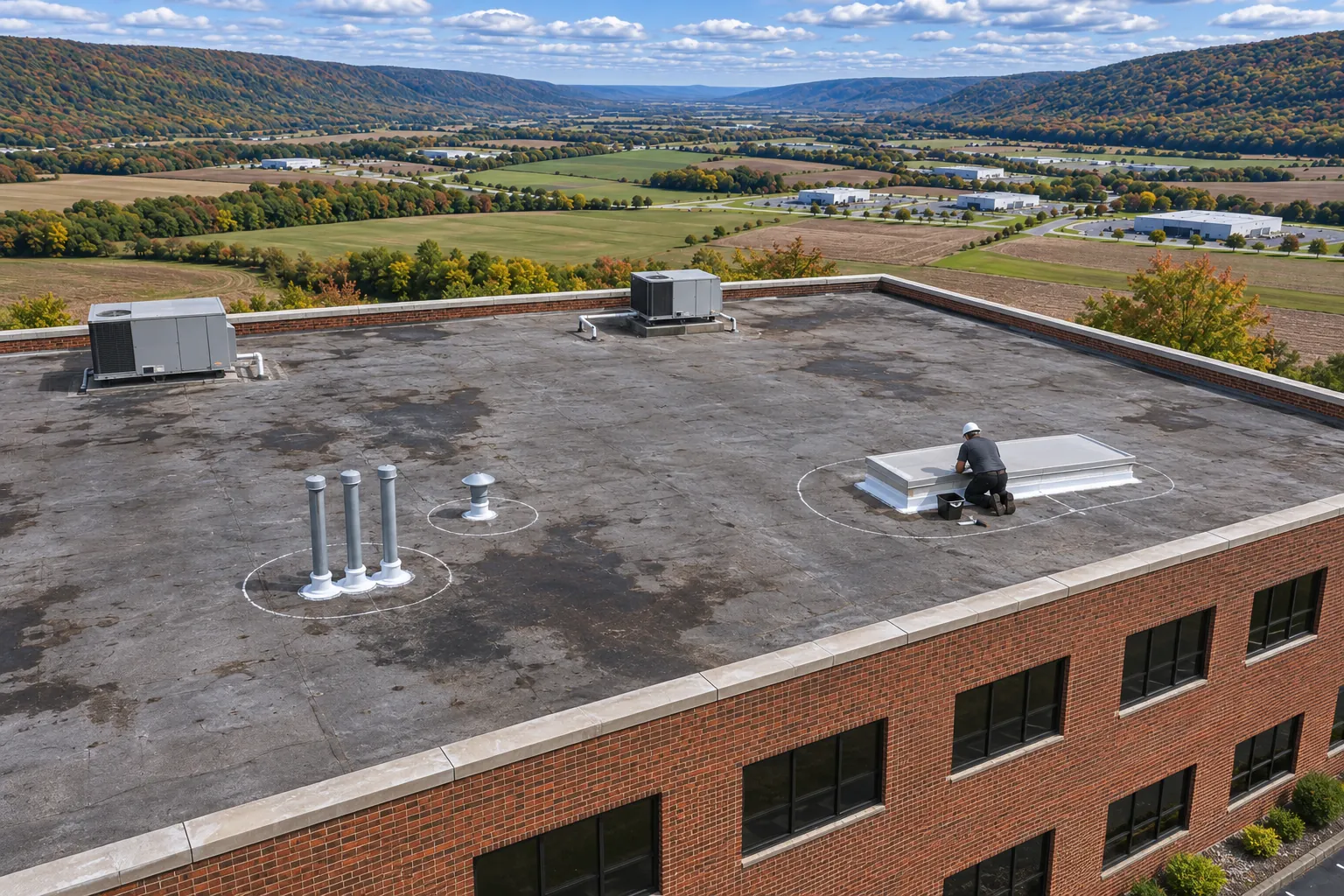
State College commercial roof leak repair fixes one entry point. When several leaks share a cause, the right repair covers the whole area behind them.
| What We Find | Leak Repair Fits | Plan a Wider Repair |
|---|---|---|
| Entry points | One clear source | Several sources in one zone |
| Insulation | Dry beyond the leak | Wet well past the stain |
| Wall joints | One open cap joint | Coping loose along the wall |
| Drainage | One blocked drain | Ponding across the roof |
| History | First leak in this spot | Same leak returning |
Water rarely drips straight below where it enters. These six sources explain most of the leaks we trace.
Open cap joints let water in above the membrane, where it runs down behind the wall flashing. The stain shows near the wall, but the fix starts at the coping.
Meltwater reaches seams and edges that rain runs past. Blocked drains and ice at the edge hold it there, and drips can start days after the snow fell.
Pipe boots, stacks, and unit curbs crack as they age and move. Water follows the pipe or the curb wall down into the building.
A lap that looks closed on top can be open underneath. Probing each seam near the leak finds the gap that a quick look misses.
Wet insulation keeps dripping after the roof surface dries. Core cuts show how far the water spread, so the repair covers all of it.
Humid indoor air can bead on cold decks and pipes. Comparing the drip with the weather shows whether the roof is involved at all.
These checks narrow a leak to its source before anything is cut or sealed.
| Check | What It Shows | When We Use It |
|---|---|---|
| Visual roof walk | Open seams, cracked flashing, debris | Every leak call |
| Core cut | Wet insulation and its depth | Soft areas or stains away from seams |
| Moisture meter | How far wet areas spread | Before setting the repair edge |
| Controlled water test | Which detail lets water in | When several sources are possible |
| Interior inspection | Water path along the deck and framing | When the stain sits far from any seam |
Fixing the real source saves repeat calls and protects what sits below the roof.
Tracing the path means the repair lands where water actually enters the roof.
Ceilings, stock, and equipment stay dry once the entry point is closed.
Photos of the source help a landlord and tenant settle who arranges the work.
Wet insulation found along the path is replaced instead of left to drip.
Call and tell us where the water shows and what sits under it. We arrange roof access and start at the stain.
What To Have ReadyFour steps take a leak from the stain on the ceiling to a closed entry point.
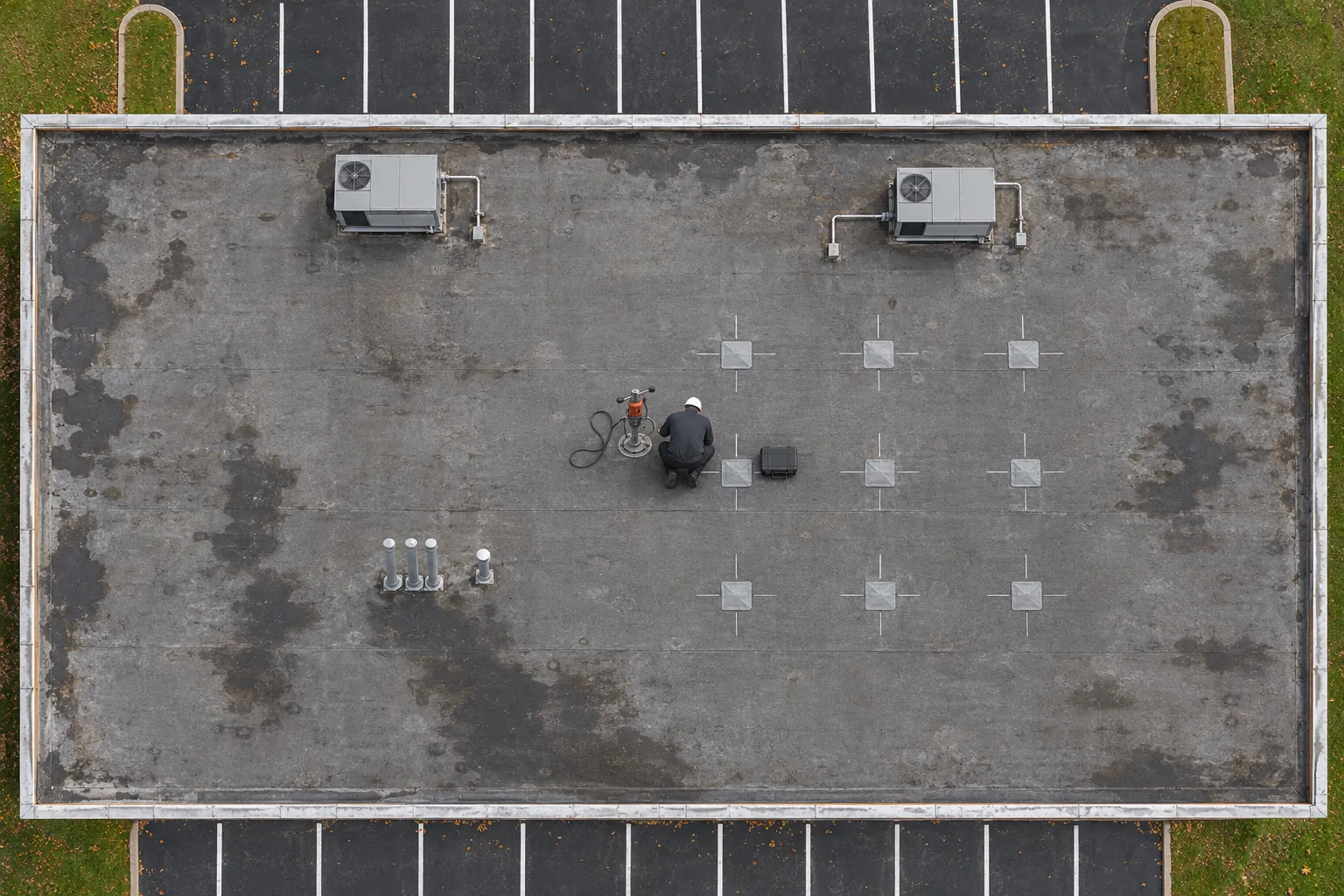
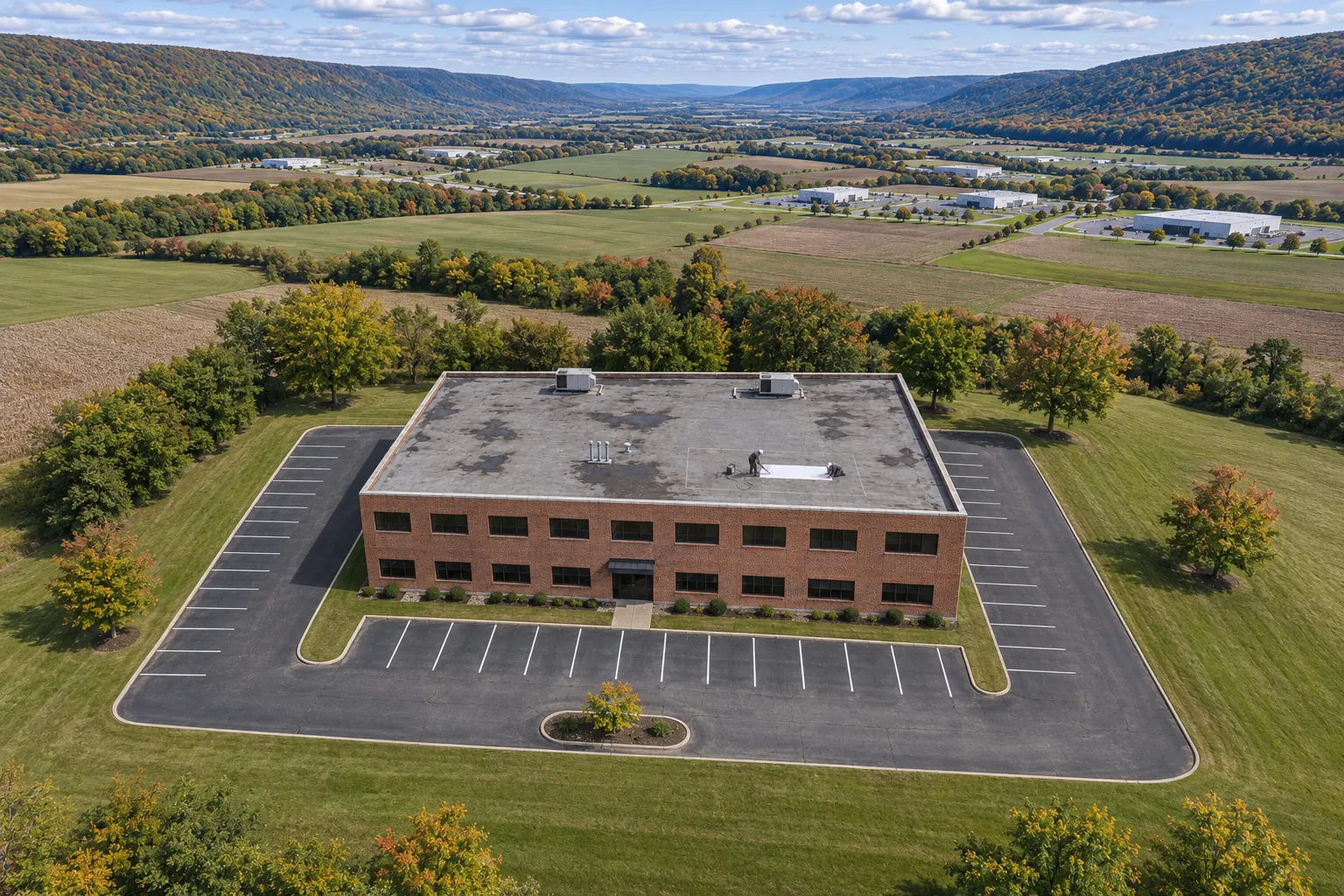
Stain location, drip timing, and the weather that day go on a sketch before we climb to the roof.
On the roof, we work outward from above the stain, checking seams, curbs, penetrations, and wall joints along the way water can travel.
A core cut or water test confirms the entry point, so the repair goes on the right detail.
The source gets repaired into solid roofing, and photos show you what failed and what was done.
Once the source is found, the repair belongs to the roof it sits on.
Many traced leaks end at a flat roof seam or drain that needs a patch or a rebuild.
Metal roofs leak at fasteners and laps, which get reset or replaced once found.
Plant leaks near stacks and process equipment need repairs staged around operations.
Answers on who arranges the work, snowmelt drips, parapets, and ice.
That turns on the lease and on how the damage happened. Landlord and tenant should read their agreement before deciding who hires and pays for the repair. Our part is documenting the roof defect and the repair it needs, so the decision rests on what the roof shows rather than guesses.
The lease language. Many commercial leases split the roof between structure and upkeep, and damage from tenant equipment can be treated differently. We stay out of the legal question and give both parties the same photos and findings, which makes the conversation easier.
Meltwater reaches defects that rain runs past or that ice blocks during storms. We check roof edges, curbs, and restricted drains while following the water path inside. Water held in the insulation can keep a drip going after the roof dries, so the trace continues until the source is clear.
Ice blocks the drainage path on a low-slope roof and holds meltwater against seams and flashing. Once it is safe to reach, we check the blocked path and the details next to it. Clearing the ice shows nothing about damage underneath, so the repair covers the water barrier, the drainage, and any wet insulation.
Only by people trained for roof work, and only with a plan that protects the membrane. Shovels and ice picks cut membrane easily, and walking a snow-loaded roof carries its own risk. We check access first and clear only what the leak trace needs.
Yes. Water entering at a loose cap can run behind the wall flashing and show up below as a roof leak. We inspect the cap joints, the wall, and the roof-to-wall connection together before choosing a repair. A patch on the membrane below would leave the wall entry open.
Often, yes. Leaks that show only with wind-driven rain or heavy snowmelt point to specific details, such as a parapet cap facing the wind or an edge that holds ice. Your notes on the weather narrow the search, and a controlled water test can recreate the conditions at the suspect detail.
Tell us where the stain is and when it drips. We trace the water to its source and repair that detail.