Abandoned Cable Openings
Holes left by old cable, phone, and antenna lines get capped quickly and forgotten. Their closures crack long before the roof around them wears out.

As a Bellefonte commercial roof repair contractor, we find and close abandoned cable openings, unused vents, and failing penetrations on older office roofs.
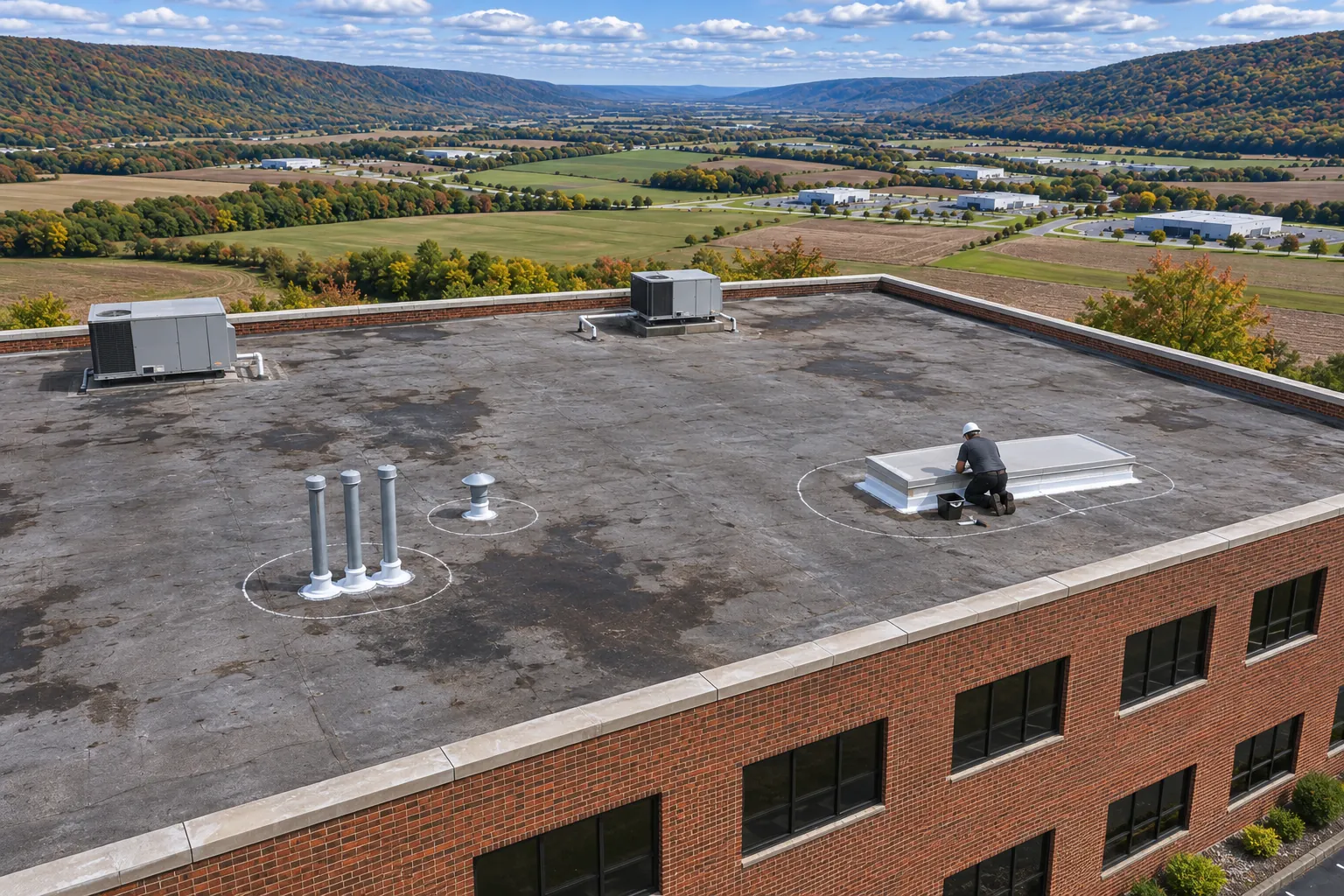
Bellefonte commercial roof repair on older offices often traces back to an opening nobody uses anymore. Old cable runs, dish mounts, and vents leave holes behind.
When a cable or antenna comes off a roof, the opening it used is often capped with sealant or a can and forgotten. Years later, the closure cracks or the flashing lets go, and water follows the old conduit into the ceiling.
We inspect the opening and the roof around it, then decide whether to remove the curb and patch the membrane flat or rebuild the flashing on a proper closure. Either way, the result restores the roof assembly instead of covering a hole with an unrelated product.
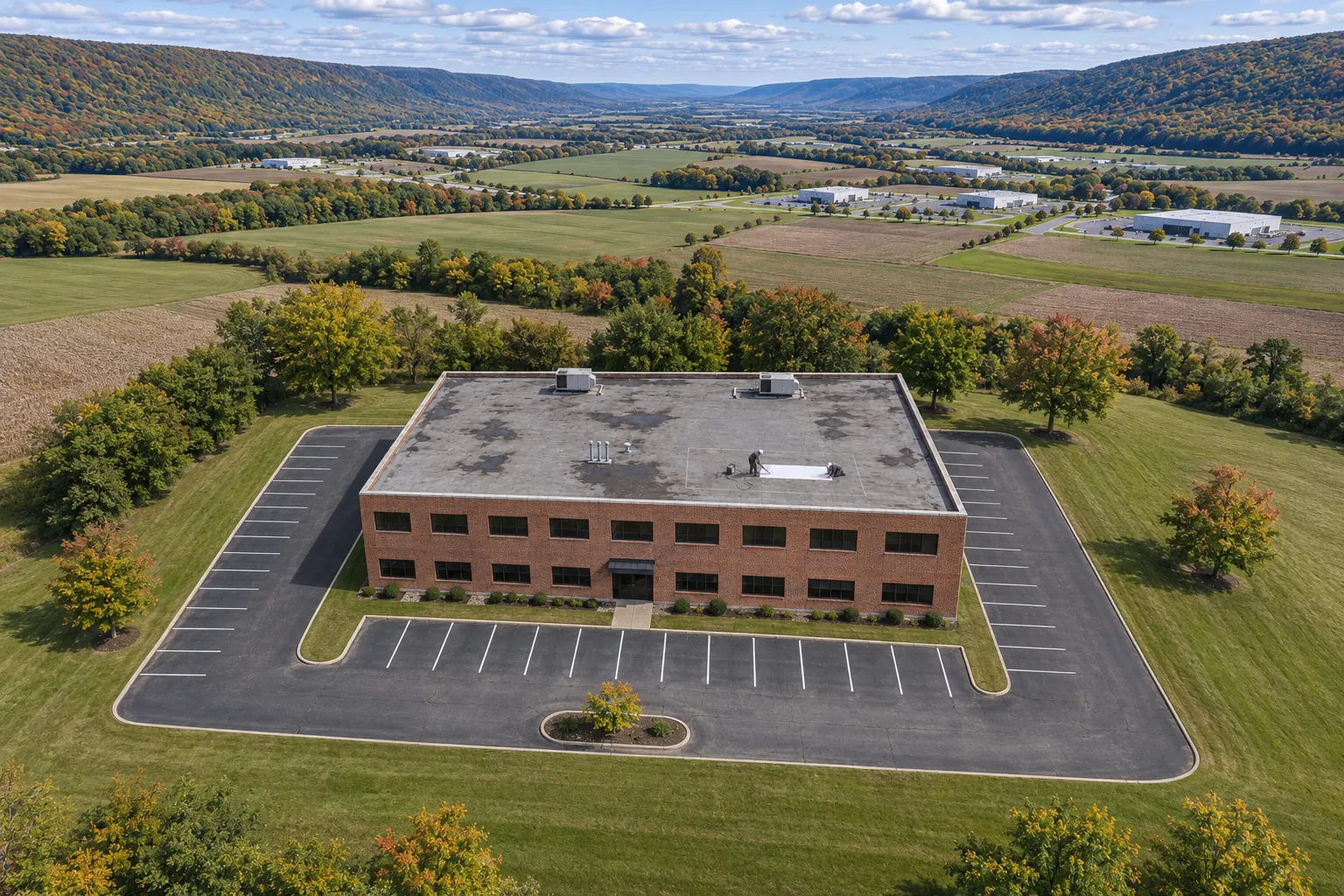
Older offices carry decades of roof openings. These six problems lead most of the repair calls we get from Bellefonte.
Holes left by old cable, phone, and antenna lines get capped quickly and forgotten. Their closures crack long before the roof around them wears out.
Equipment removed during renovations leaves curbs and vent stacks behind. Empty curbs collect water and leak at the corners, and removing them is often simpler than reflashing them.
Brick parapets on older buildings take in water through mortar joints and copings, and it shows up inside as a roof leak. The coping and wall flashing get checked before the membrane is patched.
Decades of patches pile up around penetrations. Removing what has lost its grip is part of a lasting repair.
Water entering at an old opening soaks the insulation around it. Core cuts show how far it spread before the patch goes on.
Unused ducts and chases carry warm air to cold roof decks. Drips near them can be condensation rather than a leak.
Closing old openings properly ends leaks that keep coming back.
Removing unused curbs and sleeves leaves fewer places for water to enter the roof.
A record of every opening helps when new equipment goes on the roof.
Repairs at single openings rarely disturb the rooms below the roof.
Stopping water at the old opening ends recurring ceiling stains.
Each old opening gets the closure that fits the roof around it and its future use.
| Opening | Repair | When We Use It |
|---|---|---|
| Abandoned cable sleeve | Remove and patch flat | Nothing will run through it again |
| Empty equipment curb | Remove the curb and infill the deck | Unit removed for good |
| Unused vent stack | Cap with a properly flashed closure | Vent still needed by the building |
| Active pipe penetration | New boot or pitch pan | Pipe still in service |
| Loose parapet coping | Reset the coping and add new wall flashing | Water entering above the membrane |
Call and tell us where the stain is. We look for old openings on the roof above it before anything else.
What To Have ReadyFour steps find the old opening, close it the right way, and record where it was.
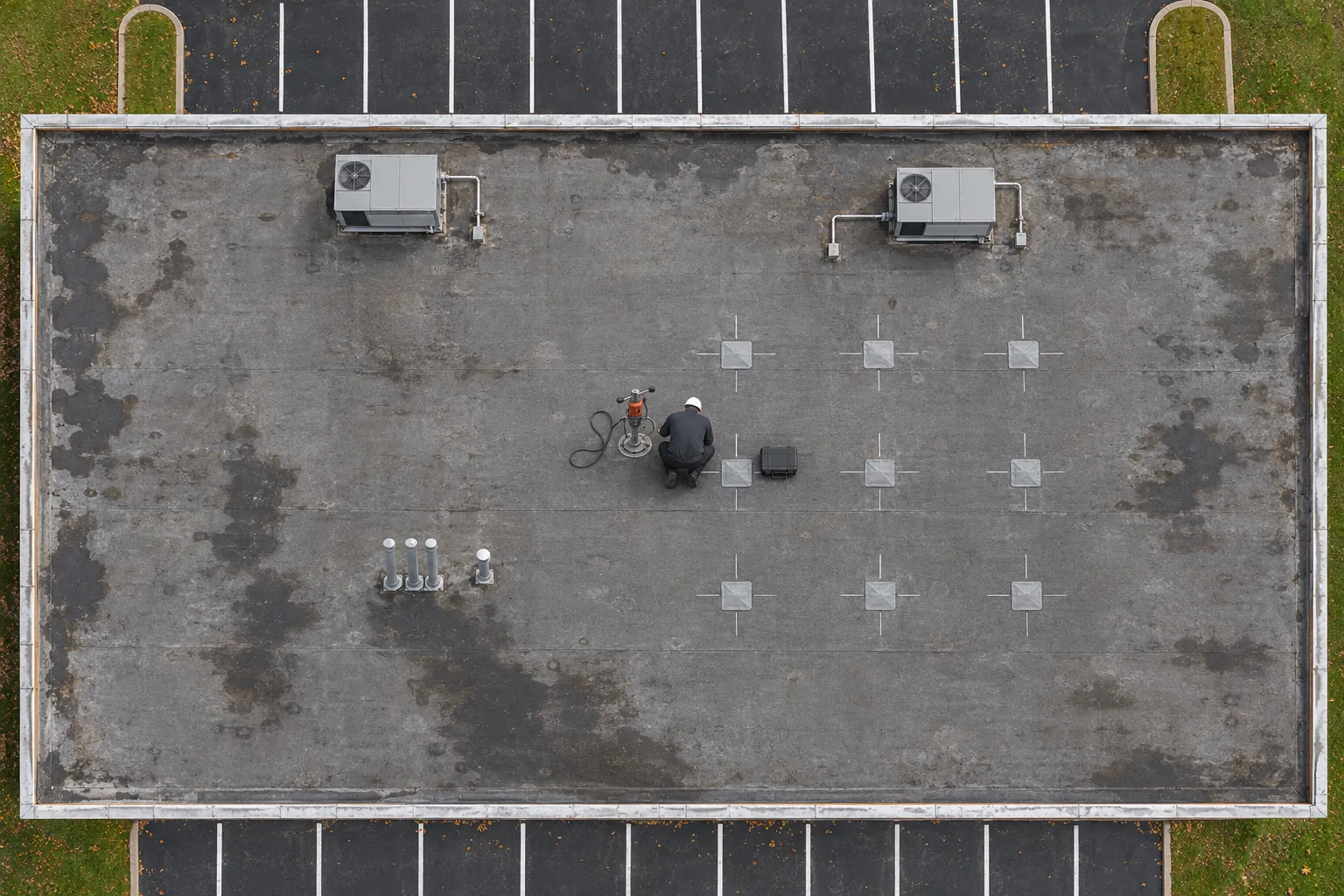
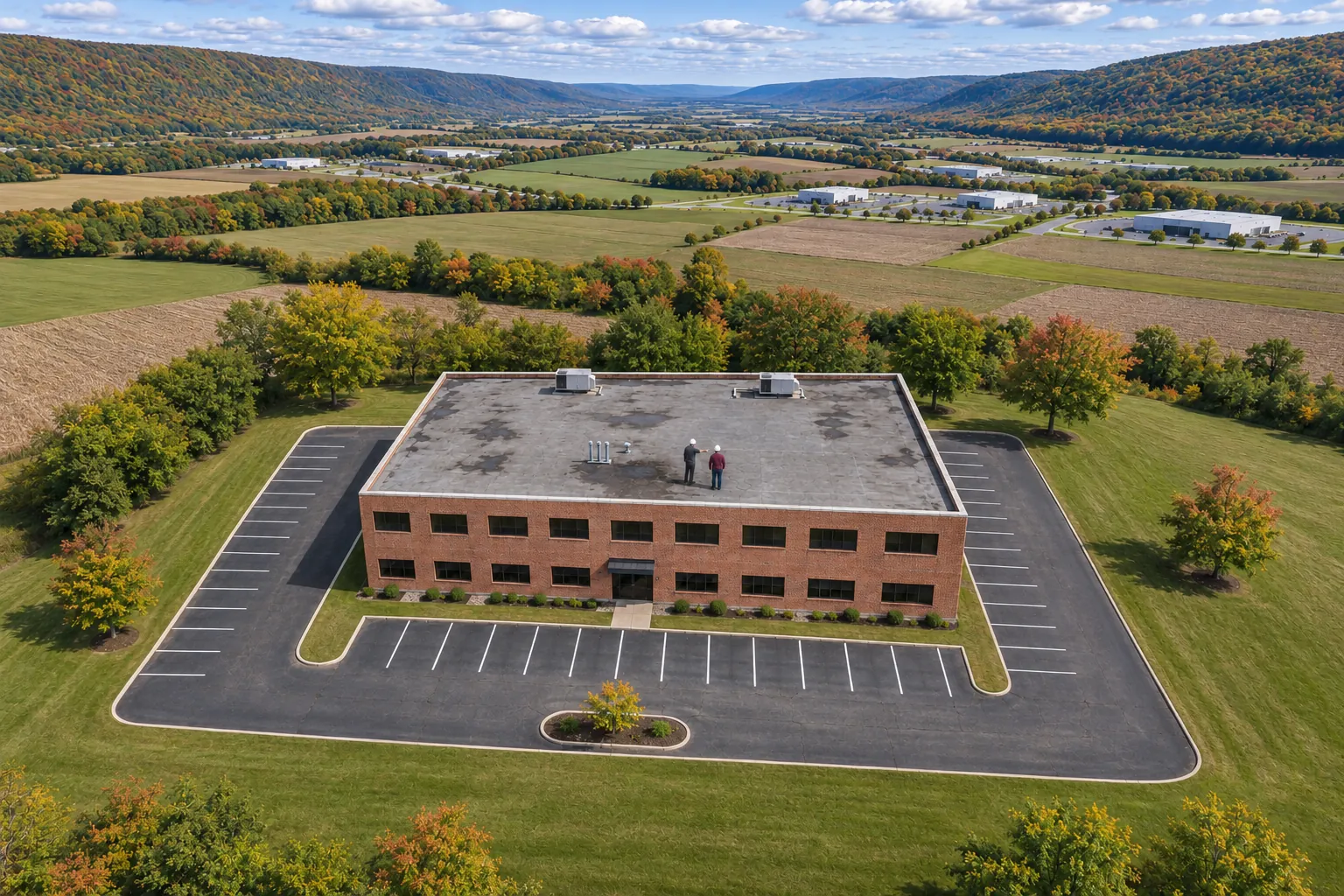
Old sleeves, curbs, and caps near the stain get marked on a roof sketch first, along with any that look recently sealed.
Moisture readings and a core cut show whether the insulation near each opening is wet, and how far the water has spread.
Unused openings come out and the deck and membrane are patched flat, while active ones get new flashing.
Photos and a marked sketch of each closed opening go to you for future roof work, so the next contractor knows what was closed.
Five other places get our repair work alongside Bellefonte. Building outside them? Call us or send us a message, and we will talk it through.
| Town | County | What We See On Roofs There |
|---|---|---|
| State CollegeHome Base | Centre | Offices, labs, and retail roofs with crowded rooftop equipment. |
| St. Marys | Elk | Shared retail roofs where leaks cross tenant walls. |
| Lewistown | Mifflin | Metal farm and equipment buildings over stored feed. |
| Clearfield | Clearfield | Repeat leaks traced against earlier repair records. |
| Punxsutawney | Jefferson | Retail centers draining into shared gutters. |
Answers for owners and managers of Bellefonte office buildings.
Yes, if its closure or flashing has worn out. We inspect the opening and the roof details around it before deciding whether to remove it or rebuild it. A proper closure restores the roof assembly instead of covering the old penetration with an unrelated repair product.
Usually, if the equipment is gone for good. An empty curb is a box that holds water and leaks at its corners. Removing it, filling the deck, and patching the membrane flat leaves one less detail to maintain. If new equipment is planned, the curb can be reflashed and kept.
The number of openings and the condition of the roof around them. One cracked closure on dry insulation is a small job, and several old openings with wet insulation around them take more work. The price is set after the inspection, once we know what each opening needs.
Sometimes. Water that enters through brick joints or a loose coping on an older parapet shows up inside as a roof leak. We check the coping, the mortar joints near the roof line, and the wall flashing, then repair the roof side and point out wall work a mason should handle.
Every penetration near the stain, including ones that look sealed. Old cable openings, empty curbs, and patched vents leak more often than the open roof between them, so a careful inspection checks each closure by hand.
Yes. A single office building gets the same inspection as a larger property. Tell us where the stain is and how to reach the roof, and we look for old openings above it first.
Tell us where the stain is and what used to be on the roof. We find the old opening and close it properly.